
By Steve Conley
Florida Keys Flood Maps 2026: What Buyers Need to Know Before Buying or Building
Executive Summary
If you're considering buying vacant land, building a home or purchasing a waterfront property in the Florida Keys, there's an important issue you should understand before making a decision:
Monroe County's new coastal flood maps are not final yet.
And according to the county's latest update, another set of preliminary maps will be released before the new maps are finalized.
That means buyers, property owners and builders should be careful about treating today's preliminary flood designations as the final answer for what can eventually be built on a property.
Monroe County says the current FEMA preliminary maps and the county's appeal maps are not final or adopted, and neither is expected to become the final map in its current form.
For anyone considering a Florida Keys property, this is an important part of due diligence.
Why Are the Florida Keys Flood Maps Important?
Flood maps aren't simply maps showing where water might go.
They are used to help establish:
- Minimum construction elevations
- Flood-zone designations
- Construction methods
- Building and site-design requirements
- Floodplain development standards
Monroe County explains that its coastal flood maps are used to determine the minimum elevation needed for construction and construction methods required in certain flood zones.
That means a change in the maps can potentially affect what a property owner can build and how that project must be designed.
For a vacant lot, that can be particularly important.
What Is Happening With the New Maps?
The current flood-map process has been underway for several years.
FEMA previously released preliminary Flood Insurance Rate Maps, commonly called FIRMs, for Monroe County.
Monroe County subsequently appealed portions of those preliminary maps.
The county's latest update now says that FEMA is expected to release another set of preliminary maps before the maps are finalized.
This is important because it means the maps currently available for comparison should not be treated as the final regulatory outcome.
Monroe County states clearly:
The preliminary and appeal maps are not final or adopted.
The county also says that the final outcome will not be known until the appeals are resolved and FEMA issues its Letter of Final Determination, followed by county adoption of the final FIRMs.
What Could Change When the Maps Are Finalized?
Potential changes can include:
- Flood-zone designation. A property's flood-zone classification could change under the final mapping.
- Required elevation. The minimum elevation required for a new structure could change.
- Construction requirements. The final maps can affect building and site-design requirements intended to reduce future flood risk.
- Permitting. Projects may have to meet different floodplain requirements depending on the final designation.
- Insurance. Map changes can affect future flood-insurance requirements and potentially insurance costs. Monroe County specifically warns property owners that changes may affect development standards and future insurance requirements and costs.
What Does This Mean for Vacant Land?
Vacant land deserves special attention.
Imagine finding a lot that appears to be an attractive opportunity.
You may already have a vision for:
- A waterfront home
- A vacation property
- A retirement home
- A second home
- A new construction project
But before assuming the property is buildable exactly as you envision it, you need to understand the applicable flood requirements.
A buyer should investigate:
- What is the current effective flood zone?
- What do the preliminary maps show?
- What does the county's appeal mapping show?
- What is the current required elevation?
- Could the required elevation change?
- What foundation or construction method might be required?
- Would the final requirements affect the size, design or cost of the project?
These questions should be answered before you rely on the property's development potential.
What If I Already Own the Property?
Existing property owners should also pay attention.
Monroe County warns that improvements permitted under existing maps could potentially become non-conforming after the maps change. The county encourages owners to consider designing improvements to address potential future requirements where appropriate.
That doesn't mean every existing home will suddenly become unusable.
It means that future construction and redevelopment decisions could be affected by the final mapping.
This can matter if you're planning:
- An addition
- A major renovation
- A rebuild
- A replacement structure
- Significant improvements
- New accessory structures
If you already own a Keys property and are planning a major project, discuss the flood-map situation with the appropriate Monroe County officials and your design/construction professionals before finalizing your plans.
Waterfront Homes Require Extra Due Diligence
The flood-map issue is especially relevant to waterfront properties.
A buyer looking at a waterfront home should evaluate more than the house itself.
Consider:
- Elevation. How high is the finished floor relative to the applicable flood requirements?
- Flood zone. What is the property's current effective designation?
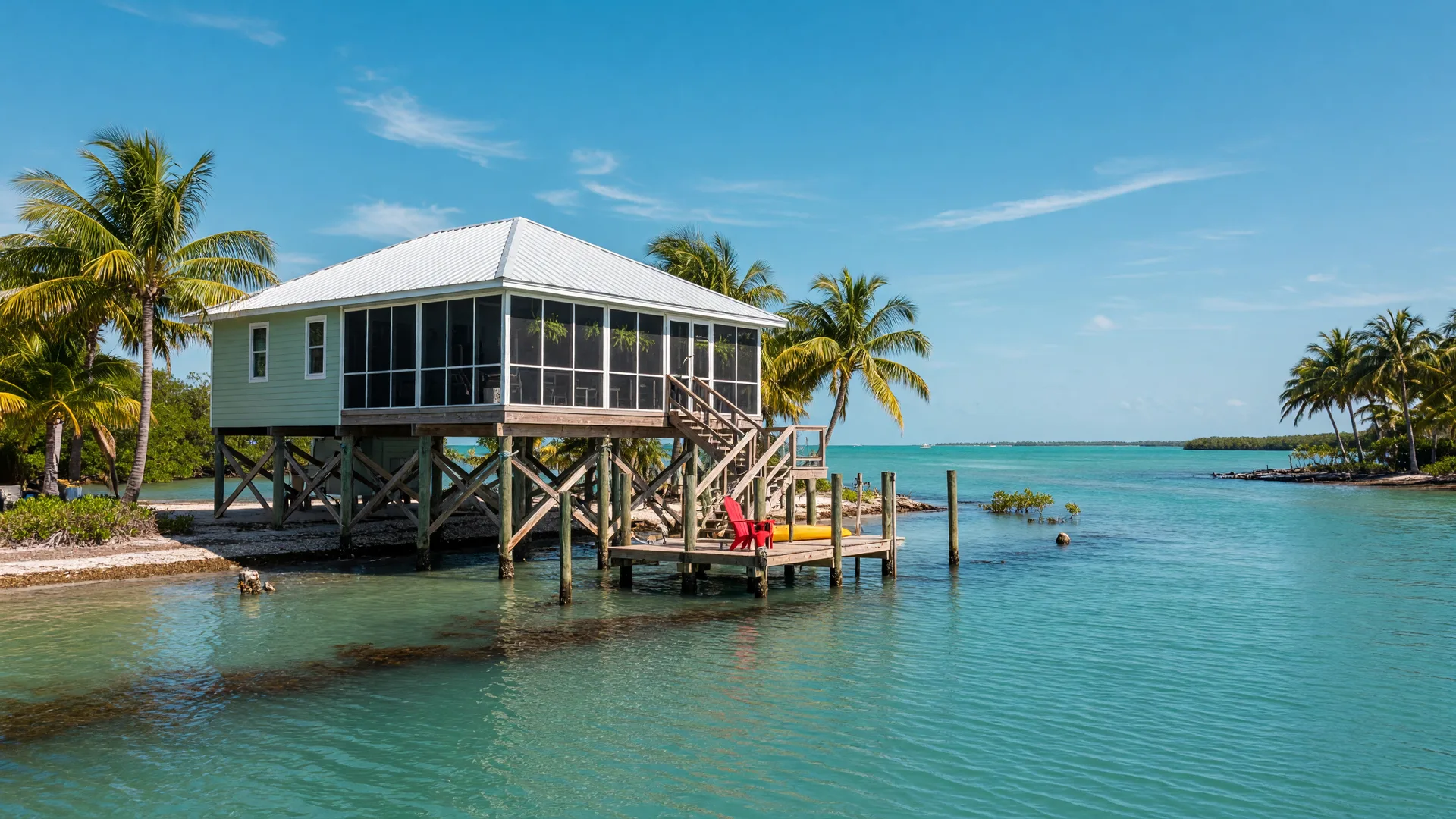
- Foundation. Is the structure elevated? What type of foundation does it have?
- Previous improvements. Were additions and renovations properly permitted?
- Seawall. What is the condition and age of the seawall?
- Dock. Is the dock permitted and in good condition?
- Insurance. What are the current homeowners and flood-insurance costs?
- Future plans. Could the property be renovated, expanded or rebuilt if necessary?
The answers can have a significant effect on the property's long-term value.
Could Flood Maps Affect Property Value?
Potentially, yes.
A property with favorable development characteristics may be more attractive to buyers than a property with significant elevation or construction challenges.
For example, two vacant lots might look similar on a listing.
But if one can accommodate the buyer's intended home with fewer construction complications while the other requires substantially higher elevation or additional flood-resistant construction, their practical value to a buyer could be very different.
This is why buyers shouldn't evaluate Keys land solely on:
- lot size + asking price + waterfront view.
Development potential matters.
What About Flood Insurance?
This is another reason buyers should pay attention to the map process.
Monroe County states that homeowners insurance excludes flood coverage. Flood insurance is a separate consideration for property owners.
The county also notes that map changes may affect future insurance requirements and costs.
For a buyer, the practical question is:
"What will it cost to insure this property now, and what could change in the future?"
Get an insurance quote for the specific property rather than relying on an estimate based only on the purchase price.
Does a New Flood Zone Automatically Mean I Can't Build?
No.
A flood-zone designation does not automatically mean a property cannot be developed.
Instead, the designation can affect how the property must be developed.
Depending on the location and applicable requirements, that could include:
- Minimum finished-floor elevation
- Foundation requirements
- Flood-resistant construction
- Utilities
- Site design
- Access
- Other building requirements
The specific requirements depend on the property's location, flood zone and applicable regulations.
That's why it is important not to interpret a preliminary map by itself as a final determination of whether a particular project is possible.
Are the Current Preliminary Maps Final?
No.
This is perhaps the most important point for anyone reading this article.
Monroe County says:
- A new set of preliminary maps is expected before finalization.
- The existing FEMA preliminary maps are not final.
- The county's appeal maps are not final.
- Neither is expected to become the final map in its current form.
The final regulatory maps will come after FEMA's process is completed and the county formally adopts them.
Monroe County's 2026 annual report also states that FEMA had not announced a timeframe for completing its review of the county's map appeals or an effective date for the new maps.
So anyone telling you that the current preliminary designation is definitely the final answer is getting ahead of the official process.
How Can I Check a Specific Property?
Monroe County provides a Flood Map Comparison Application for properties in unincorporated Monroe County.
The tool allows users to compare:
- The current effective FEMA flood maps
- The FEMA preliminary maps
- Monroe County's appeal maps
The county says the application can be searched using the property's RE number, AK number or owner's name. It does not search by street address and applies only to unincorporated Monroe County, not incorporated municipalities.
That last point is important.
If you're looking at a property in Key West, Marathon, Islamorada or another incorporated municipality, don't assume the unincorporated Monroe County mapping tool applies to that property.
What Should Buyers Do Before Purchasing?
If you're buying vacant land or a waterfront property, I would add flood-map due diligence to your normal property investigation.
Before making an offer:
- Identify the property's current effective flood zone. Don't rely only on a listing description.
- Review the available preliminary information. Understand what the potential future mapping could mean.
- Determine the property's elevation. Ask for available elevation documentation.
- Understand the development requirements. If you're buying land, have your architect, engineer or other qualified professional evaluate the intended project.
- Get an insurance quote. Understand current flood and homeowners insurance costs.
- Review permits. For an existing home, make sure additions and improvements were properly permitted.
- Ask about future plans. If you're buying the property specifically to rebuild or expand, investigate the potential requirements before closing.
Should You Wait to Buy?
That's a personal decision, but the important thing is to understand the uncertainty.
The fact that the maps aren't final does not automatically mean buyers should avoid purchasing Keys property.
But it does mean that buyers should not make a purchase decision based on an assumption that:
"The current preliminary map is definitely what will apply forever."
It isn't.
For a property where future development is central to the investment thesis, the potential flood-map changes should be part of the financial and construction analysis.
Why This Matters for the Florida Keys Real Estate Market
The Florida Keys have a unique combination of:
- Coastal exposure
- Limited land
- High construction costs
- Waterfront demand
- Flood risk
- Strict development requirements
That makes floodplain information particularly important when evaluating property.
A home that works perfectly for a buyer who intends to live in it as-is may be very different from a property being purchased by someone who wants to tear it down and build a larger home.
Likewise, a vacant lot may look inexpensive until the buyer understands the engineering, elevation and construction requirements involved.
What Buyers Should Ask Before Closing
If you're considering a Keys property, ask:
About the flood maps
- What is the current effective flood zone?
- What do the available preliminary maps show?
- Is the property in an area affected by the current map update?
About construction
- What elevation is currently required?
- What elevation is the existing structure?
- Could the proposed project be affected by future mapping?
- What construction methods may be required?
About insurance
- What is the current flood-insurance cost?
- What is the homeowners-insurance cost?
- Does the property's elevation affect the premium?
- Could the map change affect future insurance requirements?
About the property
- Are all improvements permitted?
- Are there existing elevation certificates?
- Are there open permits?
- What is the condition of the foundation?
- What is the condition of the seawall and dock?
The Bottom Line
Monroe County's new coastal flood maps are still a work in progress, and buyers should treat the current preliminary information as exactly that: preliminary.
The county says another set of preliminary maps will be released before the maps are finalized, and the current FEMA preliminary maps and Monroe County appeal maps are not expected to become the final maps in their current form.
For someone buying a home to live in today, this may be one part of a broader due-diligence process.
For someone buying vacant land, waterfront property or a home they intend to substantially renovate or rebuild, it can be much more significant.
The potential impact isn't limited to flood zones.
It can extend to:
- What you can build.
- How high you need to build.
- How the property must be designed.
- What permits may be required.
- How much the project could cost.
- And potentially how much it costs to insure the property.
The safest approach is to evaluate the specific property, understand the current effective requirements, review the available preliminary information and consult the appropriate county officials and qualified professionals before relying on the property for a future development plan.
In the Florida Keys, the view may sell the property, but the flood map can help determine what you can do with it.
FAQs
Frequently Asked Questions
Are the current preliminary maps final?
Does a new flood zone automatically mean I can't build?
Could flood maps affect property value?
What about flood insurance?
What should buyers do before purchasing?
Related Guides
Helpful Guides
5 Things to Know Before Buying Waterfront in the Keys
Seawalls, flood insurance, water depth, and permits: the waterfront details most buyers overlook.
The Ultimate Guide to Waterfront Homes in the Florida Keys
What waterfront living in the Keys really involves, from elevation and pilings to insurance and docks.
5 Mistakes First-Time Buyers Make in the Florida Keys (And How to Avoid Them)
Avoid common pitfalls when buying your first home in the Keys.
Buying in the Florida Keys
The complete step-by-step guide to the Keys buying process.
What Flood Zone Is My Florida Keys Property In?
How to find and understand your property’s flood zone.
What is a FEMA elevation certificate?
How elevation certificates work and why they matter for Keys buyers.
Resources
Official Sources
Ready to Take the Next Step?
Flood maps are just one part of buying in the Keys. Steve can help you understand what any property's flood zone, elevation, and development potential really mean before you commit.
We are committed to compliance with all federal, state, and local fair housing laws. We do not discriminate against any person because of race, color, religion, sex, national origin, familial status, or disability. Equal Housing Opportunity.