
Stone Crab Season in the Florida Keys: When It Opens, Where to Eat, and How to Catch Them
Key Takeaways
- Stone crab season opens October 15 and runs through May, making fall and winter the prime months for fresh claws in the Florida Keys.
- Stone crab is an important seasonal fishery in Florida, and fresh claws are available at restaurants and seafood markets throughout the Florida Keys during the open season.
- Only the claws are harvested, and only from crabs at least 2 7/8 inches from elbow to tip; the crab is returned to the water alive to regrow.
- Know the rules before you drop a trap: a 1-gallon-per-person daily bag limit, 5 traps per person, and no claws from egg-bearing females.
- Book a waterfront table for stone crab in advance in season, and ask your fish market when the fresh claws land each week.
The Short Answer
Stone crab season in the Florida Keys opens October 15, 2026, and runs through May 1, 2027. During the open season, stone crab claws are a popular seasonal seafood choice at restaurants and seafood markets throughout the Keys. If you love the taste of the Gulf and Atlantic in one cracked claw, this is the dish that locals wait all summer for. And because the Keys sit at the center of the fishery, the moment the season opens, fresh claws show up at dockside shacks, fish markets, and waterfront restaurants from Key Largo all the way down to Key West.
Why Stone Crab Is a Big Deal in the Florida Keys
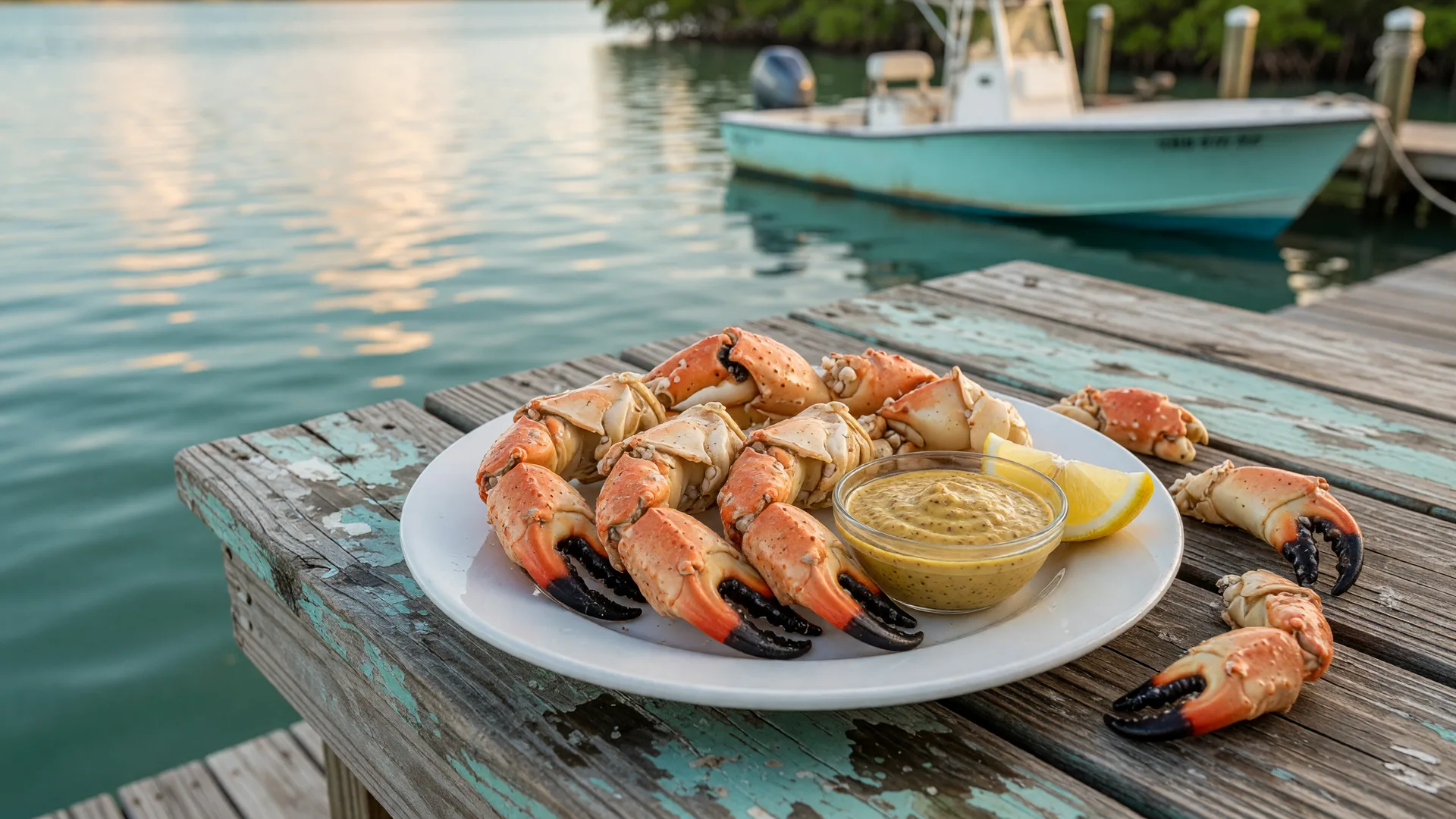
Stone crab is not just a meal in the Keys; it is a season, a ritual, and a way of life. When the calendar flips toward October, locals start checking the docks the way other places watch a sports schedule. The Florida stone crab, Menippe mercenaria, lives along the Gulf and Atlantic coasts, and Florida stone crab is harvested commercially and recreationally along Florida's Gulf and Atlantic coasts, including the Florida Keys. The Florida Keys are an important part of the region's seasonal seafood culture, particularly during the October-through-May harvest season. The claws are the prize, sweet, dense, and firm, served cold with a creamy mustard sauce and a side of melted butter.
One of the distinctive features of Florida's stone crab fishery is that only legal-sized claws are harvested and the crab is returned to the water. Fishermen take only the claws and return the crab to the water alive, where it can regenerate the lost claw through subsequent molts. Florida's stone crab season runs from October 15 through May 1, giving the fishery an annual harvest window of roughly six and a half months. Florida regulates the fishery through seasonal closures, minimum claw sizes, harvest limits, trap requirements, and protections for egg-bearing females. For a fisherman, a stone crab trap is less a one-time catch and more a slow, reliable harvest that keeps giving.
Did you know? A stone crab doesn't immediately grow a replacement claw. Adult stone crabs typically molt once a year, and it can take several molts for a lost claw to fully regenerate.
The opening date matters to anyone planning a Keys visit. October 15 is the day the fresh claws start flowing, and restaurants and markets across the island chain change their menus overnight. If you time a trip for mid-October, you are at the very front of the season, which is exactly where the most in-demand tables want to be.
When Stone Crab Season Opens and Closes
For the 2026-2027 season, stone crab opens on Thursday, October 15, 2026, and closes on May 1, 2027, with the last day of harvest on May 1 and the season closing on May 2. These dates are set by the Florida Fish and Wildlife Conservation Commission (FWC) and apply to both state and federal waters, including the entire Florida Keys. The exact close can shift a day or two year to year, so it is always worth confirming on the official FWC page before you plan a spring trip.
In practical terms, the best window for fresh Keys stone crab is October through about April. Early season claws are prized, and the winter months, when the Keys are full of visitors, are when the biggest selections land. Stone crab remains a popular seasonal seafood choice during the fall, winter and spring portions of the open season.
The Rules Every Angler and Diner Should Know
If you want to catch your own stone crab, the regulations are straightforward but strict, and they exist to keep the fishery healthy. Here are the numbers that matter, straight from FWC:
- Minimum claw size: 2 7/8 inches, measured from the elbow to the tip of the lower immovable portion of the claw. Smaller claws must go back.
- Only claws are harvested. The crab goes back into the water alive.
- You may not take claws from egg-bearing (berried) female crabs, and you may not use spears, hooks, or any device that can puncture, crush, or injure the body.
- Recreational bag limit: 1 gallon of claws per person, or 2 gallons per vessel, whichever is less.
- You may use up to 5 stone crab traps per person.
- Recreational trap registration: Anyone age 16 or older who uses recreational stone crab traps must complete the annual, no-cost Florida recreational stone crab trap registration. Each registered trap must display the required registration information.
- All recreational and commercial traps must have an unobstructed escape ring 2 3/16 inches in diameter in a vertical exterior wall.
- At the end of the season, recreational and commercial harvesters must follow FWC's trap-removal requirements. Check the current FWC regulations for the specific requirements that apply to your type of harvest.
If you plan to trap, the easiest way to start is with a licensed bait shop or tackle shop in Key Largo or Islamorada that sells or rents the right gear and can walk you through the local rules. The Keys are a working fishing community, so the local shops are genuinely helpful.
For everyone who would rather eat than trap, the same size and season rules protect what lands on your plate. A legal claw is a big, meaty claw, and knowing the size standard helps you recognize a well-run market from one that cuts corners.
How Is a Stone Crab Claw Measured?
The legal size of a stone crab claw is measured by the length of the propodus, the larger, immovable portion of the claw. The measurement runs from the base at the elbow joint to the outer tip of the propodus. The minimum legal size is 2 7/8 inches (73 mm).
What Does a Legal Recreational Stone Crab Trap Need?
Recreational stone crab traps must meet Florida's equipment requirements. FWC allows traps up to 24 inches by 24 inches by 24 inches, or a maximum volume of 8 cubic feet. Trap construction, escape rings, degradable panels, buoy markings and registration information are also regulated. Check the current FWC requirements before purchasing or setting a trap.
Where to Eat Stone Crab in the Florida Keys
The beauty of eating stone crab in the Keys is that you rarely have to go far from the water. Here is a practical, community-by-community map of where to look:
- Key Largo: The top end of the chain has a cluster of waterfront restaurants and fish markets that put fresh claws on the menu the moment the season opens. Ask at the fish market when the day's claws landed, because dockside freshness is the whole point.
- Islamorada: Known as the sportfishing capital of the world, Islamorada is the center of the Keys seafood scene. Mile Marker 73 to 82 is lined with bayside and oceanside restaurants, and stone crab is a seasonal highlight on most menus. Islamorada has several seafood markets and restaurants where stone crab is featured during the season.
- Tavernier and Plantation Key: Just north of Islamorada, this stretch is quieter but has loyal local seafood spots where the regulars go. If you want the experience without the biggest crowds, this is a good place to look.
- Marathon: In the Middle Keys, Marathon has a strong working waterfront and a row of no-frills seafood shacks that serve stone crab the old way, cracked and piled high.
- Key West: The southernmost end of the chain has the broadest restaurant selection, from casual dockside counters to white-tablecloth spots, all leaning hard into fresh stone crab during the season.
The universal local advice is to call ahead. Stone crab is popular, the most popular tables book up in season, and some spots sell out of the day's claws by late afternoon. A short phone call saves a wasted drive across the islands.
What to Know as a Buyer in the Keys
If you are scouting property, the stone crab season is a wonderful window into the real Keys, not just the vacation version. The working docks, the fish markets, and the seasonal restaurant rhythm are exactly what makes life here different from a resort town. When the season opens, the whole island chain feels busier, livelier, and more like itself.
The fishing economy is also a good sign for the local real estate market. Strong seasons support the charter captains, the markets, the restaurants, and the waterfront homes that make the Keys special. If you are looking at a waterfront or canal property, being close to a good marina or fish market is a real quality-of-life advantage, and it is the kind of detail worth weighing when you compare communities. My Key Largo community guide and Islamorada community guide break down the neighborhoods around these working waterfronts, and the Marathon community guide covers the Middle Keys.
Pairing Stone Crab With a Keys Lifestyle
Stone crab is the perfect excuse to spend an afternoon on the water. Because the season runs through fall and winter, the weather is mild, the sun is soft, and the water stays comfortable. Many visitors build a day around it: a morning on the boat, a stop at the fish market, and a sunset dinner of fresh claws with the mustard sauce and a cold local beer.
If you are new to the Keys, the complete guide to fishing in the Florida Keys explains how the local seasons stack up, from tarpon and snapper to lobster and stone crab. And if seafood is your reason for coming, my guide to the best seafood markets and fish shacks in the Florida Keys and the local's guide to seafood dining will point you to the local spots worth the trip.
Steve's Bottom Line
Stone crab season is one of the most recognizable seasonal traditions in the Florida Keys. The 2026-27 season opens October 15 and runs through May 1. Whether you're interested in catching your own, buying claws from a seafood market, or enjoying them at a local restaurant, understanding the season and harvest rules helps you make the most of your visit. And if you're considering making the Florida Keys home, seasonal traditions like stone crab are part of what makes waterfront communities here different from a typical resort destination.
2026-2027 Florida Stone Crab Season: Quick Reference
| Item | Details |
|---|---|
| Season opens | October 15, 2026 |
| Last day of harvest | May 1, 2027 |
| Season closes | May 2, 2027 |
| Minimum claw size | 2 7/8 inches / 73 mm |
| Recreational daily limit | 1 gallon per person OR 2 gallons per vessel, whichever is less |
| Recreational traps | Maximum 5 per person |
| Egg-bearing females | Harvest prohibited |
| Legal gear | Stone crab traps, dip nets or landing nets |
| Recreational trap registration | Required annually for harvesters age 16+ |
| Escape ring | 2 3/16 inches for applicable plastic/wood traps |
Follow Along
Stay connected with the Conley Sales Group for more Keys real estate tips, waterfront listings, and island lifestyle content.
Frequently Asked Questions
When does stone crab season open in the Florida Keys?
Stone crab season opens October 15, 2026, and runs through early May. The exact opening and closing dates are set each year by the Florida Fish and Wildlife Conservation Commission and apply to both state and federal waters.
Where can I eat stone crab in the Florida Keys?
Fresh claws show up at waterfront restaurants and fish markets across the chain, with strong concentrations in Key Largo, Islamorada, Marathon, and Key West. Call ahead in season, because the best spots book up and can sell out of the day's claws.
What is the size limit for Florida stone crab claws?
The minimum claw size is 2 7/8 inches, measured from the elbow to the tip of the lower immovable portion. Smaller claws must be returned to the water, and only the claws are harvested; the crab goes back alive to regrow them.
What is the bag limit for recreational stone crab in Florida?
The recreational daily bag limit is 1 gallon of claws per person, or 2 gallons per vessel, whichever is less. You may use up to 5 stone crab traps per person, and you cannot take claws from egg-bearing females.
Is stone crab season the same as lobster season in the Keys?
No. Spiny lobster has its own seasons, including the famous two-day mini season in July and a regular season that runs into late winter. Stone crab runs from October through May. Both are favorite Keys foods, but they follow different calendars.
Can you take both claws from a stone crab?
Yes. Florida regulations currently allow both legal-sized claws to be harvested from a stone crab. However, FWC notes that leaving one claw can help the crab feed and defend itself after being returned to the water.
Does the crab survive after its claws are removed?
Stone crabs are returned to the water after legal claws are removed. The crab can regenerate a lost claw through subsequent molts, although regeneration takes time. Adult crabs typically molt once a year, and a fully regenerated claw may require several molts.
Helpful Resources & Related Guides
Internal Resources
- Key Largo Community Guide: Neighborhoods and waterfront living at the top of the island chain
- Islamorada Community Guide: The sportfishing capital and its seafood scene
- The Complete Guide to Fishing in the Florida Keys: How the local fishing seasons stack up
- Best Seafood Markets and Fish Shacks in the Florida Keys: Where locals buy the freshest catch
- Florida Keys Market Report: Current market data across Key Largo, Islamorada, and Marathon
- Contact Steve Conley: Talk to a local agent about making the Keys home
External Resources
- FWC Stone Crab, Recreational: Official season dates, size limits, and bag limits
- FWC News: Stone Crab Season Starts Oct. 15: The official announcement for the fall season
- Florida Realtors: Statewide real estate market news and data
Official Florida Stone Crab Resources
- Florida Fish and Wildlife Conservation Commission - Recreational Stone Crab Regulations: Official recreational season dates, claw size limits, bag limits, and trap rules from FWC
- FWC - Stone Crab FAQ: Answers to common questions about Florida's stone crab fishery and its seasons
- FWC - Recreational Trap Requirements: Registration and gear requirements for recreational stone crab traps

Steve Conley
Principal, Conley Sales Group at COMPASS · License #3232648
Thinking About Buying or Selling in the Florida Keys?
Whether you're buying your first waterfront home, selling a luxury property, or simply want to know what your home is worth, I'm here to help. As a local Compass REALTOR, I provide expert guidance, market insights, and personalized advice throughout the Florida Keys.
We are committed to compliance with all federal, state, and local fair housing laws. We do not discriminate against any person because of race, color, religion, sex, national origin, familial status, or disability. Equal Housing Opportunity.