
Hidden Draft for Steve's Review
This post is not published. It is absent from the blog index, category pages, homepage, and sitemap, and it is marked noindex so search engines will not crawl it. No publication date has been stamped. It goes live only after Steve approves it.
By Steve Conley, Principal of the Conley Sales Group at COMPASS
Birding in the Florida Keys: Your Complete Fall Migration Guide
Key Takeaways
- The Florida Keys Hawkwatch at Curry Hammock State Park (Mile Marker 56.2 in Marathon) runs from mid-September through early November, and October is its peak month for migrating raptors.
- The Keys hold world records for peregrine falcons: 651 counted in a single day on October 10, 2012, and 1,506 on October 10, 2015, a stretch that earned the island chain the title "Peregrine Falcon capital of the world."
- Fall songbird migration peaks at the same time. Morning flights are monitored from Long Key State Park, and warblers like Tennessee, Black-throated Blue, and Prairie stop to feed in the tropical hardwood hammocks of Key Largo and Islamorada.
- Top hotspots run the length of the chain: Dagny Johnson Key Largo Hammock Botanical State Park, Curry Hammock State Park, the National Key Deer Refuge on Big Pine Key, Bahia Honda State Park, and Fort Zachary Taylor State Park in Key West.
- Birding is a year-round quality-of-life feature of Keys living, and it is one of the details buyers weigh when they look at hammock-adjacent and waterfront properties.
The Short Answer
Where is the best birding in the Florida Keys? The honest answer is that the whole island chain is a birding destination, and the best spot depends on the season. Fall is the standout: from mid-September through early November, the Florida Keys Hawkwatch at Curry Hammock State Park counts migrating raptors as they funnel south over the Middle Keys, and the hammocks of Key Largo, Tavernier, and Islamorada fill with warblers and other songbirds refueling after a Gulf crossing. October is the peak of fall migration, and the Keys are one of the best places in the country to watch it happen.
Why the Keys Are a Birding Destination
Geography does the work. The Florida Keys are the first landfall for birds crossing the Gulf of Mexico and the eastern seaboard, a narrow chain of islands that funnels migrants south toward the Caribbean. The National Weather Service in Key West has used Doppler radar to document the scale: millions of birds cross the Keys during the September and October peak, with roughly 25,000 birds per mile per hour on the busiest nights. When a cold front pushes birds south, the islands act like a net, and the next morning the trees are moving.
That concentration makes the Keys famous among birders. The chain sits at the northern edge of the Caribbean, so species that are rare elsewhere in the United States, like the mangrove cuckoo, white-crowned pigeon, and gray kingbird, are regulars here. Add the refuges, state parks, and undeveloped hammocks, and you have a year-round birding scene with a fall season that draws visitors from across the country.
Fall Migration: The Florida Keys Hawkwatch
The centerpiece of fall birding is the Florida Keys Hawkwatch, a citizen-science project based at Curry Hammock State Park at Mile Marker 56.2 in Marathon. It runs roughly mid-September through early November, and October is the peak. Counters sit on the beach and tally every raptor that passes, from broad-winged hawks and ospreys to merlins and peregrine falcons.
The peregrine falcon is the star. The site has set world records for the species, including 651 peregrines counted in a single day on October 10, 2012, and 1,506 on October 10, 2015, a total that earned the Keys the title "Peregrine Falcon capital of the world." On a good October day you can watch falcons, kestrels, and sharp-shinned hawks stream south for hours.
The Hawkwatch also tracks songbird migration. Volunteers monitor the "morning flights" of land birds from Long Key State Park at Mile Marker 67.5, where warblers, vireos, and swallows pass over the beach at dawn. The Florida Keys Audubon Society has hosted an annual Hawk Mania celebration in October in past years; check the society's event calendar for this year's date before you plan a visit.
Best Birding Spots by Community
Key Largo and Tavernier
Dagny Johnson Key Largo Hammock Botanical State Park protects one of the largest tracts of tropical hardwood hammock in the country, and it is the top spot in the Upper Keys for migrant songbirds. Mangrove cuckoos and white-crowned pigeons live here year-round, and in October the hammock fills with warblers. Just to the north, Crocodile Lake National Wildlife Refuge covers roughly 6,700 acres of salt marsh, mangrove forest, and hammock, with trails near the visitor center and tranquil roads that reward early-morning walks.
Islamorada
The island villages of Islamorada hold their own hammock pockets, and Windley Key Fossil Reef Geological State Park offers a short, shaded nature trail where migrants rest. Anne's Beach on Lower Matecumbe Key is a good spot for shorebirds and wading birds at low tide. And the famous tarpon feed at Robbie's Marina draws brown pelicans, white ibis, and herons that have learned exactly when the fish buckets come out.
Marathon and the Middle Keys
Curry Hammock State Park is the fall epicenter, with the Hawkwatch running through early November. Long Key State Park at Mile Marker 67.5 offers the morning-flight vantage and a shaded nature trail through coastal hammock. Sombrero Beach in Marathon is a good stop for gulls, terns, and shorebirds.
Big Pine Key and the Lower Keys
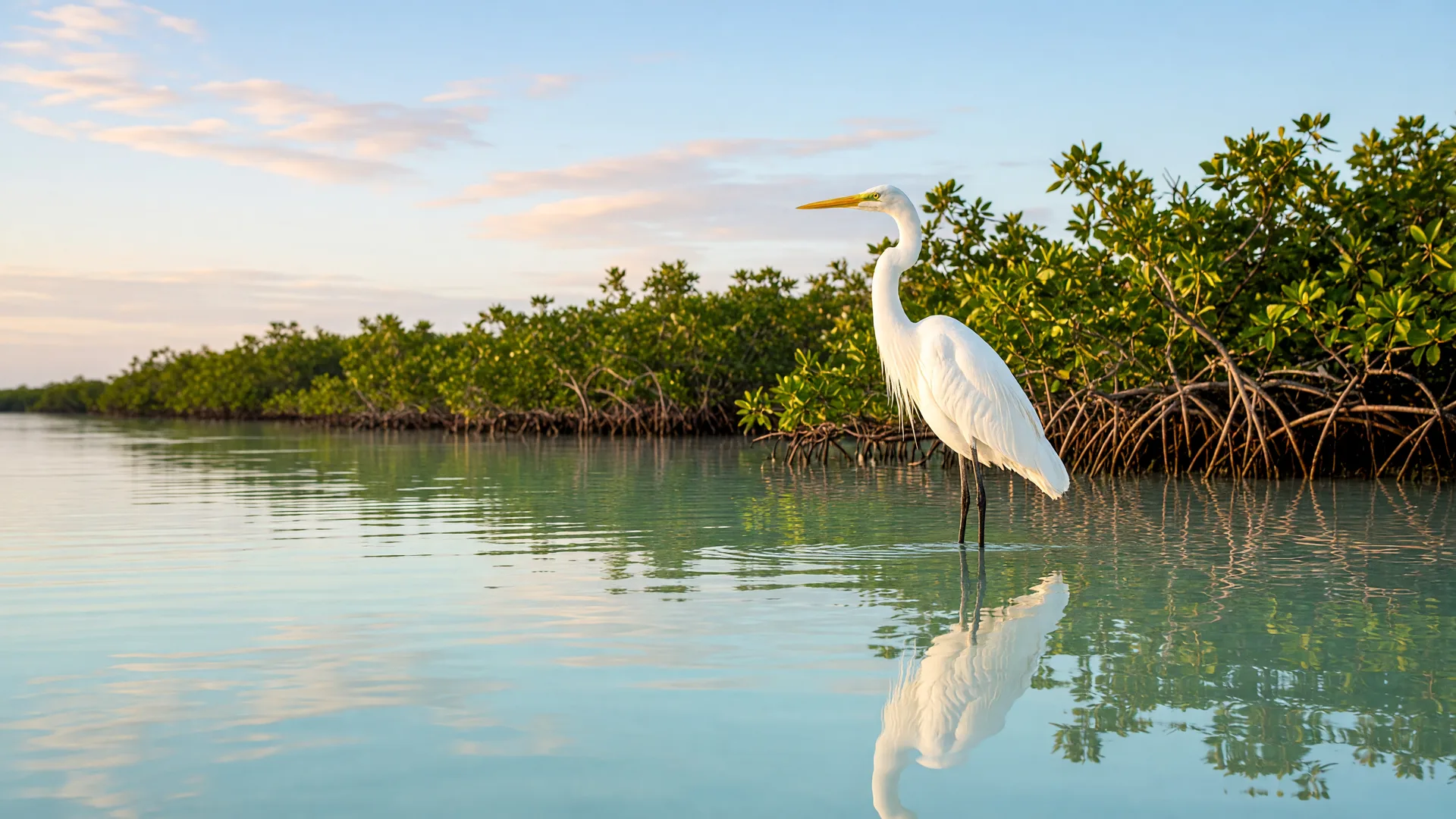
The National Key Deer Refuge on Big Pine Key protects the endangered Key deer, and the same habitat draws migrating songbirds, shorebirds, hawks, and ospreys. Great white herons and reddish egrets feed in the shallow flats along the refuge roads. Bahia Honda State Park, with its historic bridge remnants, is one of the best birding sites in the Lower Keys, especially along the west side of the Old Bahia Honda Bridge, where wading birds gather at the water's edge.
Key West
Fort Zachary Taylor State Park is the best birding spot in the city, with fall migrants working through the trees and the moat area hosting belted kingfishers, tricolored herons, and great white herons. Indigenous Park and the White Street Pier add coastal species, and the Key West National Wildlife Refuge, reachable only by boat, holds wading birds, seabirds, and roseate spoonbills.
Dry Tortugas
The bucket-list destination is Dry Tortugas National Park, about 70 miles west of Key West by boat or seaplane. Bush Key hosts the only major breeding colony of sooty terns in the continental United States, with roughly 80,000 nesting each year, along with about 4,500 brown noddies. Magnificent frigatebirds wheel overhead, and spring and fall both bring rare migrants. It is a full-day commitment, and it is worth every minute.
What You'll See: Species to Know
Keep an eye out for the Keys specialties: roseate spoonbills, white-crowned pigeons, gray kingbirds, mangrove cuckoos, Antillean nighthawks, reddish egrets, magnificent frigatebirds, ruby-throated hummingbirds, peregrine falcons, yellow-billed cuckoos, and white-eyed vireos. In fall, the warblers dominate: Tennessee, Black-throated Blue, and Prairie warblers are regulars in the hammocks, and a single tree can hold several species at once.
Practical Tips for Birding in the Keys
- Go early. Dawn is when the birds are most active and the light is best, and it is also the coolest part of the day.
- Bring optics and water. Binoculars are essential, and a spotting scope helps at the Hawkwatch and the refuge flats. Carry more water than you think you need.
- Check the count. The Florida Keys Hawkwatch posts daily totals online, so you can time a visit to a big flight day.
- Respect the wildlife. Stay on trails, keep dogs on leashes where they are allowed, and never approach nesting birds or Key deer.
- Plan for boat access. The Key West and Great White Heron National Wildlife Refuges are boat-only; book a charter or kayak trip if you want to reach them.
- Mind the sun and bugs. Sunscreen, a hat, and insect repellent make a long morning much more comfortable.
For more outdoor ideas, my parks and outdoor recreation guide rounds up the state parks and preserves where the best birding happens, and the diving and snorkeling guide covers the underwater side of Keys wildlife.
Birding and the Real Estate Connection
Birding is one of those quality-of-life features that shapes how people actually live in the Keys. Buyers who love the outdoors ask about hammock-adjacent lots, waterfront views over the flats, and neighborhoods close to parks and refuges, because those are the places where the daily routine includes great blue herons at the seawall and ospreys working the bay. It is a detail I point out on showings right alongside dockage, water depth, and seawall condition.
Each community has its own character along the chain. My Key Largo community guide, Islamorada community guide, and Marathon community guide break down the neighborhoods and their access to parks and refuges, and the Big Pine Key community guide covers the Lower Keys, including the National Key Deer Refuge. If the dream is a home where the morning coffee comes with a warbler chorus, that is a lifestyle I can help you find, and my buying guide explains the practical steps to getting there.
Steve's Bottom Line
Birding in the Florida Keys is a year-round pleasure with a fall season that is genuinely world class. Plan around the Florida Keys Hawkwatch at Curry Hammock in October, hit the hammocks of Key Largo and Islamorada on a migration morning, and save a day for the refuges and state parks from Marathon to Key West.
And if a migration morning makes you wonder what it would be like to live here, that is a conversation I would love to have. Call me at (305) 393-5859 or send a note through the contact page, and we can talk about the communities, the waterfront homes, and the birds you could be watching every season of the year.
FAQs
Frequently Asked Questions
Where is the best birding in the Florida Keys?
When is fall bird migration in the Florida Keys?
What is the Florida Keys Hawkwatch?
Can you see sooty terns in the Florida Keys?
Do I need a boat to go birding in the Keys?
Site Links & Sources
Helpful Resources & Related Guides
Internal Guides
Key Largo Community Guide
Dagny Johnson hammock and Crocodile Lake refuge access at the top of the chain.
Marathon Community Guide
Curry Hammock State Park and the Florida Keys Hawkwatch.
Big Pine Key Community Guide
The National Key Deer Refuge and Lower Keys birding.
Parks and Outdoor Recreation in the Florida Keys
The state parks and preserves where the best birding happens.
Diving and Snorkeling in the Florida Keys
The underwater side of Keys wildlife, from reefs to fish life.
The Florida Keys Buying Guide
The practical steps from financing to closing on a Keys home.
External Sources
- Florida Keys Hawkwatch Daily raptor counts, migration records, and visitor information.
- Florida Keys Audubon Society: Where to Bird Local hotspots, species lists, and events from the local chapter.
- National Weather Service Key West: Bird Migration FAQ The radar science behind fall migration over the Keys.

Steve Conley
Principal, Conley Sales Group at COMPASS · License #3232648
Thinking About Buying or Selling in the Florida Keys?
Whether you're buying your first waterfront home, selling a luxury property, or simply want to know what your home is worth, I'm here to help. As a local Compass REALTOR, I provide expert guidance, market insights, and personalized advice throughout the Florida Keys.
We are committed to compliance with all federal, state, and local fair housing laws. We do not discriminate against any person because of race, color, religion, sex, national origin, familial status, or disability. Equal Housing Opportunity.