
By Steve Conley
Where to See Manatees, Dolphins, and Sea Turtles in the Florida Keys
Key Takeaways
- Florida manatee season runs November 15 through March 31, and the cooler months are the best time to spot manatees in the Keys' warm canals, marinas, and shallow bays.
- John Pennekamp Coral Reef State Park in Key Largo and Molasses Reef are top spots for sea turtles, with the calm-water snorkel season running roughly from November through May.
- Florida Bay and the bayside of the Keys are the most reliable places to see bottlenose dolphins, especially on eco-tours from late fall through spring.
- Bahia Honda State Park and Dry Tortugas National Park offer clear-water sightings of manatees, dolphins, rays, and sea turtles from late fall through spring.
- Manatees are a protected species: slow down in posted zones, keep your distance, and never feed or chase marine wildlife.
The Short Answer
Where can you see manatees, dolphins, and sea turtles in the Florida Keys? The short answer is that the whole island chain is a wildlife destination, and the best window is the cooler half of the year. Florida manatee season runs November 15 through March 31, and that is exactly when manatees move into the warm canals, marina basins, and shallow bay waters of Key Largo, Tavernier, and Islamorada. Dolphins work the bays and open-water channels year-round, and the calm-water snorkel season that runs roughly from November through May makes the reefs off Key Largo, Marathon, and the Dry Tortugas the clearest place to see sea turtles in their natural habitat.
Why Late October Into Spring Is the Best Time
Three things line up in the fall to make the Keys a wildlife-watching destination. First, cooling water pushes manatees into the warm, protected pockets where they are easiest to see. Second, the calm-water season arrives: from roughly November through May the seas flatten and the water clears, which is the standard window local operators use for reef snorkeling trips. Third, sea turtle nesting season in Florida runs March 1 through October 31, so by late October the nesting cycle is wrapping up and the turtles themselves stay on the reefs year-round.
The dry season brings another advantage. From late fall through spring, the Keys get long stretches of sunny, low-humidity days with calmer seas, which makes time on the water more comfortable. If you want to combine wildlife watching with snorkeling, diving, or boating, this is the stretch to plan around. For a broader look at the island chain's parks and preserves, see our guide to parks and outdoor recreation in the Florida Keys.
Manatees in the Florida Keys: Where and When
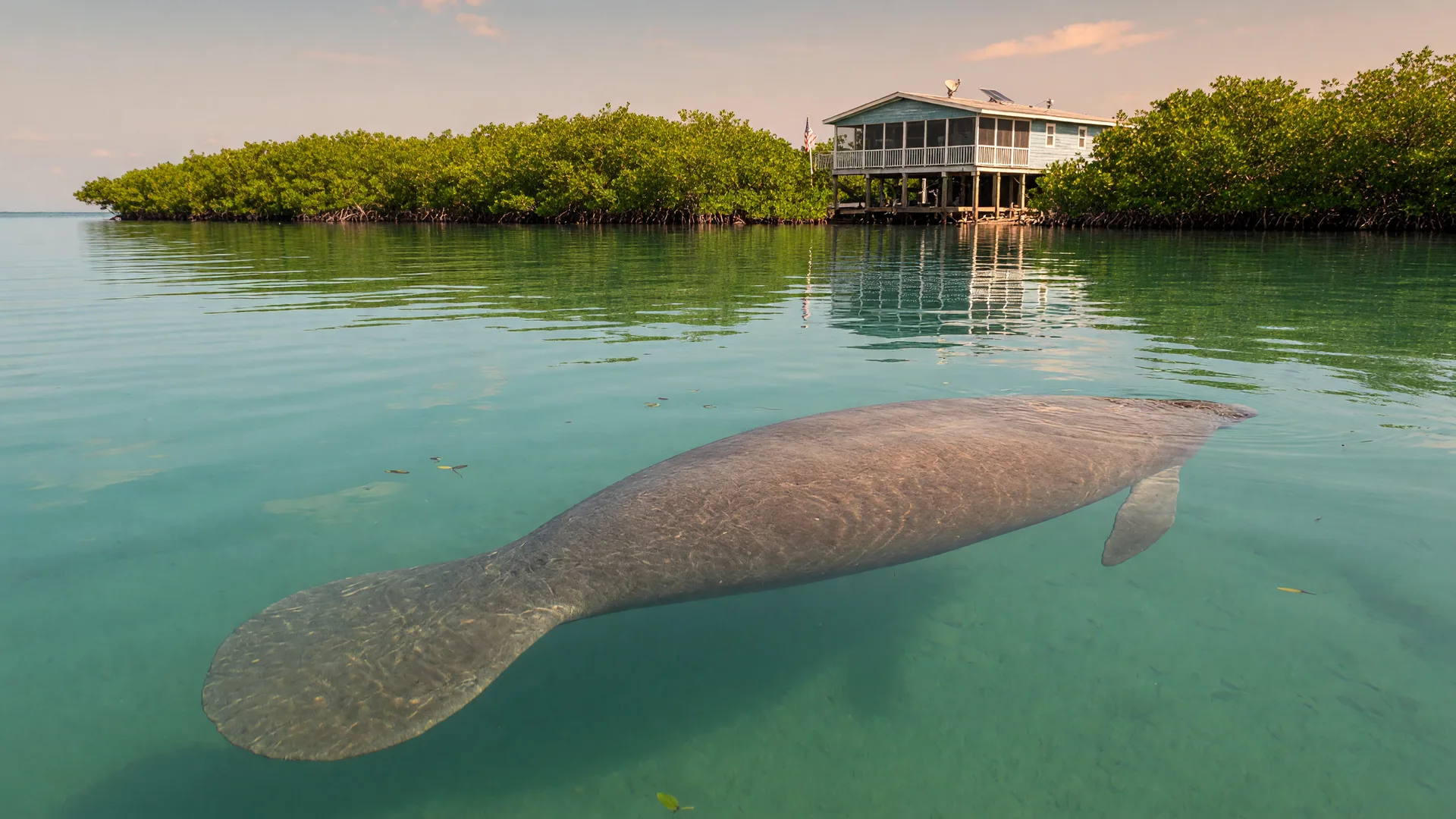
Manatees are Florida's state marine mammal, and in the Keys they are a winter fixture. The Florida Fish and Wildlife Conservation Commission sets manatee season from November 15 through March 31. During those months, manatees gather in warm, shallow, protected water: residential canals, marina basins, and the seagrass flats of Florida Bay.
In the Upper Keys, the canals of Key Largo and Tavernier Creek are noted manatee hangouts in winter. Boaters often spot them resting in the calm water near the mangroves, and homeowners along the canals see them on a regular basis during the cooler months. Farther down the chain, the docks at Robbie's Marina in Islamorada regularly draw manatees, along with the brown pelicans and white ibis that have learned to gather around the famous tarpon feed.
For a more structured outing, head to Florida Bay on the bayside of the Everglades, where boat tours out of Flamingo run from November through late April and reliably turn up dolphins and manatees. Back in the Keys, any calm canal or marina can hold a manatee in winter, which is why local rules matter. Manatee protection zones across Monroe County use idle-speed and no-wake designations to keep boats from striking these slow-moving animals. When you see a posted zone, slow down: it is both the law and the right thing to do.
Bottlenose Dolphins: Where the Pods Travel
Bottlenose dolphins are the social stars of Keys waters. They are present year-round, but the bayside of the island chain is where you are most likely to see pods on a regular basis. Florida Bay, the waters around the Seven Mile Bridge near Marathon, and the shallow Gulf-side flats all host resident and visiting pods.
Dolphins are often easiest to spot in the morning, when the light is low and the water is glassy. They travel in family groups, and on a calm morning you may see them rolling at the surface, feeding on mullet, or riding the bow wake of a passing boat. Eco-tours and backcountry charters out of Key Largo, Islamorada, and Marathon regularly encounter pods, and the captains know the channels the dolphins favor. Because dolphins are protected under the Marine Mammal Protection Act, the rule is to let them approach you, never to chase or crowd them.
Sea Turtles: From Nesting Beaches to the Reef
Florida is the heart of sea turtle nesting in the United States: roughly 90 percent of all sea turtle nesting in the country happens on Florida beaches, and the official nesting season runs March 1 through October 31, with the peak in May through July. By late October, the hatchlings have made their way to the water, and the adult and juvenile turtles are out on the reefs where they feed year-round.
The clearest place to see them is underwater. John Pennekamp Coral Reef State Park in Key Largo protects the northern end of the Florida Reef Tract, and the park's snorkel trips to Molasses Reef, about six miles offshore, are well known for encounters with sea turtles and nurse sharks. The reef is home to loggerheads, greens, and hawksbills, along with the coral, sponges, and tropical fish that make the Keys one of the top snorkel destinations in the country. See our best diving and snorkeling in the Florida Keys for the full rundown on reef sites.
Farther west, the reefs around Sombrero off Marathon and the clear waters of Dry Tortugas National Park, about 70 miles west of Key West, are also dependable sea turtle territory. The calm-water window from roughly November through May gives you the best visibility at all of them.
Best Spots by Community
Key Largo and Tavernier
Start with John Pennekamp Coral Reef State Park for sea turtles, then check the residential canals for winter manatees. Crocodile Lake National Wildlife Refuge on the northern end of Key Largo protects the rare American crocodile, which suns on the shoreline and mangrove banks. For the full picture of the area, read the Key Largo community guide.
Islamorada and Plantation Key
Robbie's Marina is the easiest place to see manatees and wading birds up close, and Windley Key Fossil Reef Geological State Park offers a shaded trail through a fossilized coral reef. The bayfront along Upper and Lower Matecumbe Keys is prime dolphin and wading-bird water. Learn more in the Islamorada community guide.
Marathon and Duck Key
The old and new Seven Mile Bridge spans are a classic spot for dolphins, tarpon, and sea birds. Sombrero Beach and the adjacent reef offer beach access plus snorkeling. Around Duck Key, the protected canals and channels near Hawks Cay are quiet water where manatees and dolphins move through. See the Marathon community guide for more.
Big Pine Key and the Lower Keys
Bahia Honda State Park delivers the full lineup: manatees, dolphins, rays, and sea turtles in clear water, with a long sand beach that is one of the best in the Keys. The National Key Deer Refuge on Big Pine Key protects the tiny Key deer, a subspecies found nowhere else on earth, along with wading birds and migratory songbirds. The Big Pine Key community guide covers the Lower Keys in depth.
Planning Your Visit: Practical Tips
Planning a wildlife day in the Keys is simple. Start early, when the water is calmest and the animals are most active. Bring polarized sunglasses, which cut the glare and let you see manatees and sea turtles just under the surface. Sunscreen, a hat, water, and a camera round out the kit. If you are heading to a reef site like Molasses or Sombrero, book your snorkel trip ahead in the calm-water season, because the good weather windows fill quickly. And keep an eye on the wind forecast: light mornings with easterly winds are ideal, while strong winds can churn up the flats and drop visibility.
Where you stay matters too. A canal-front rental in Key Largo or a bayfront room in Islamorada puts the wildlife right outside the door, and many local captains and guides work out of the same marinas you will be staying near. For longer trips, pairing a few days on the water with time in the parks of Big Pine Key and the Lower Keys gives you the full range of the island chain's wildlife in one visit.
How to Watch Responsibly
Every species in this guide is protected, and watching them responsibly keeps both you and the animals safe. Never feed, touch, chase, or crowd a manatee, dolphin, or sea turtle. Give them space and let them choose to approach. Slow down in shallow water and seagrass beds, where manatees rest and feed just under the surface, and obey every posted manatee protection zone. If you see a sick, injured, or orphaned manatee, report it to the FWC Wildlife Alert hotline at 888-404-3922. A quiet approach with polarized sunglasses is all you need: these animals are easy to see when you stop looking for splashes and start watching the surface for a slow roll.
Why Wildlife Watching Matters for Keys Living
For the people who move here, this is not a vacation activity; it is daily life. A canal-front home in Key Largo puts manatees in the backyard in winter. A bayfront lot in Islamorada means dolphins on the morning coffee view. A home near the refuges of Big Pine Key comes with herons, egrets, and the occasional Key deer crossing the road. Buyers who want this kind of lifestyle often weigh proximity to parks, refuges, canals, and clean water as heavily as square footage.
If you are thinking about buying or selling in the Keys, Steve can point you toward the communities and properties that put you closest to the wildlife you love. Reach out through the contact page, and if you are comparing areas, the Islamorada, Key Largo, and Marathon guides are a good place to start.
FAQs
Frequently Asked Questions
What time of year is best to see manatees in the Florida Keys?
Where can I see dolphins in the Florida Keys?
Can you see sea turtles in the Keys without scuba gear?
Is it safe to swim with manatees?
Where is the best place to see manatees in the Upper Keys?
Internal Links & Sources
Helpful Resources & Related Guides
Internal Resources
- Key Largo Community Guide - Pennekamp, the reef, and the winter manatee canals
- Islamorada Community Guide - Robbie's Marina and the bayfront wildlife scene
- Marathon Community Guide - The Seven Mile Bridge and Sombrero Reef
- Parks and Outdoor Recreation in the Florida Keys - State parks, trails, and preserves from Key Largo to Marathon
- Best Diving and Snorkeling in the Florida Keys - Reef sites where turtles and rays are common
- Contact Steve Conley - Questions about buying or selling in the Keys
External Resources
- FWC Manatee Information - Season dates, protected status, and how to help
- FWC Sea Turtles - Nesting season, species, and conservation
- Florida Keys National Marine Sanctuary - Rules for the reef and marine life
- Dry Tortugas National Park - Plan a trip to the clear-water reefs

Steve Conley
Principal, Conley Sales Group at COMPASS · License #3232648
Thinking About Buying or Selling in the Florida Keys?
Whether you're buying your first waterfront home, selling a luxury property, or simply want to know what your home is worth, I'm here to help. As a local Compass REALTOR, I provide expert guidance, market insights, and personalized advice throughout the Florida Keys.
We are committed to compliance with all federal, state, and local fair housing laws. We do not discriminate against any person because of race, color, religion, sex, national origin, familial status, or disability. Equal Housing Opportunity.