
Florida Keys Boating & Waterfront Lifestyle | 2027 Regulation Update
By Steve Conley
Can Boaters Anchor in Florida Keys Sanctuary Preservation Areas in 2027?
Boating is one of the biggest attractions of living in the Florida Keys. From fishing and diving to exploring coral reefs and spending time on the water, the island chain offers some of the most recognized boating destinations in the country.
Boaters planning to explore the Keys in 2027 should understand an important regulatory change: anchoring will be prohibited in most Sanctuary Preservation Areas (SPAs) within the Florida Keys National Marine Sanctuary.
Under the National Oceanic and Atmospheric Administration's Restoration Blueprint, the updated regulations are intended to protect sensitive coral reef habitats by reducing damage caused by anchors and associated equipment.
For boat owners, fishing enthusiasts, waterfront homeowners and prospective property buyers, the change affects how boating plans are made throughout the Keys. So where will anchoring still be allowed, what alternatives are available, and which areas will carry the new restrictions? Here is what you need to know before heading out on the water in 2027.
What Is Changing for Boaters in 2027?
NOAA's Florida Keys National Marine Sanctuary has established 17 Sanctuary Preservation Areas to protect biologically important shallow reef habitats.
These areas provide protection for coral communities and marine species while allowing compatible recreational activities such as boating, diving and snorkeling.
Beginning in 2027, anchoring of any kind will be prohibited in most SPAs. Instead, boaters will be required to use designated mooring buoys where available and permitted.
NOAA has not specified an exact calendar start date for the change. Its published information identifies 2027, so boaters should check the latest official regulations before planning trips.
According to NOAA, the new anchoring restrictions are part of the Restoration Blueprint, a comprehensive update to sanctuary management and marine zoning regulations. The purpose is to reduce physical damage to coral reefs caused by anchors, chains and other anchoring equipment.
Important: The change does not prohibit boating throughout the Sanctuary Preservation Areas. Boaters can still navigate through these areas, subject to applicable sanctuary regulations.
Which Sanctuary Preservation Areas Will Prohibit Anchoring?
NOAA identifies 17 Sanctuary Preservation Areas throughout the Florida Keys. Under the 2027 rule, anchoring of any kind will be prohibited in 11 of them.
- Alligator Reef SPA
- Carysfort SPA
- Coffins Patch SPA
- Conch Reef SPA
- Davis Reef SPA
- The Elbow SPA
- Key Largo Dry Rock-Grecian Rocks SPA
- Looe Key SPA
- Molasses Reef SPA
- Sombrero Key SPA
- Other designated areas within these listed SPA boundaries
The six areas specifically excluded from the new blanket anchoring prohibition are:
- Hen and Chickens SPA
- Cheeca Rocks SPA
- Newfound Harbor Key SPA
- Eastern Dry Rocks SPA
- Rock Key SPA
- Sand Key SPA
These six exceptions do not mean unrestricted anchoring. Existing restrictions still apply, including prohibitions against anchoring on living or dead coral or attached organisms, and anchoring when a mooring buoy is available for use.
For boaters, the important distinction is that the new blanket prohibition applies to 11 SPAs, while the six named exceptions remain subject to the existing SPA anchoring requirements.
NOAA's published SPA list and its stated total of 17 should be checked against the updated marine-zone maps and final regulatory text, particularly the newer Turtle Rocks designation. Zone boundaries are not always obvious on the water, so the official maps are the authority before any trip.
What Are Mooring Buoys and How Do Boaters Use Them?
Mooring buoys provide an alternative to anchoring and help protect sensitive underwater habitats.
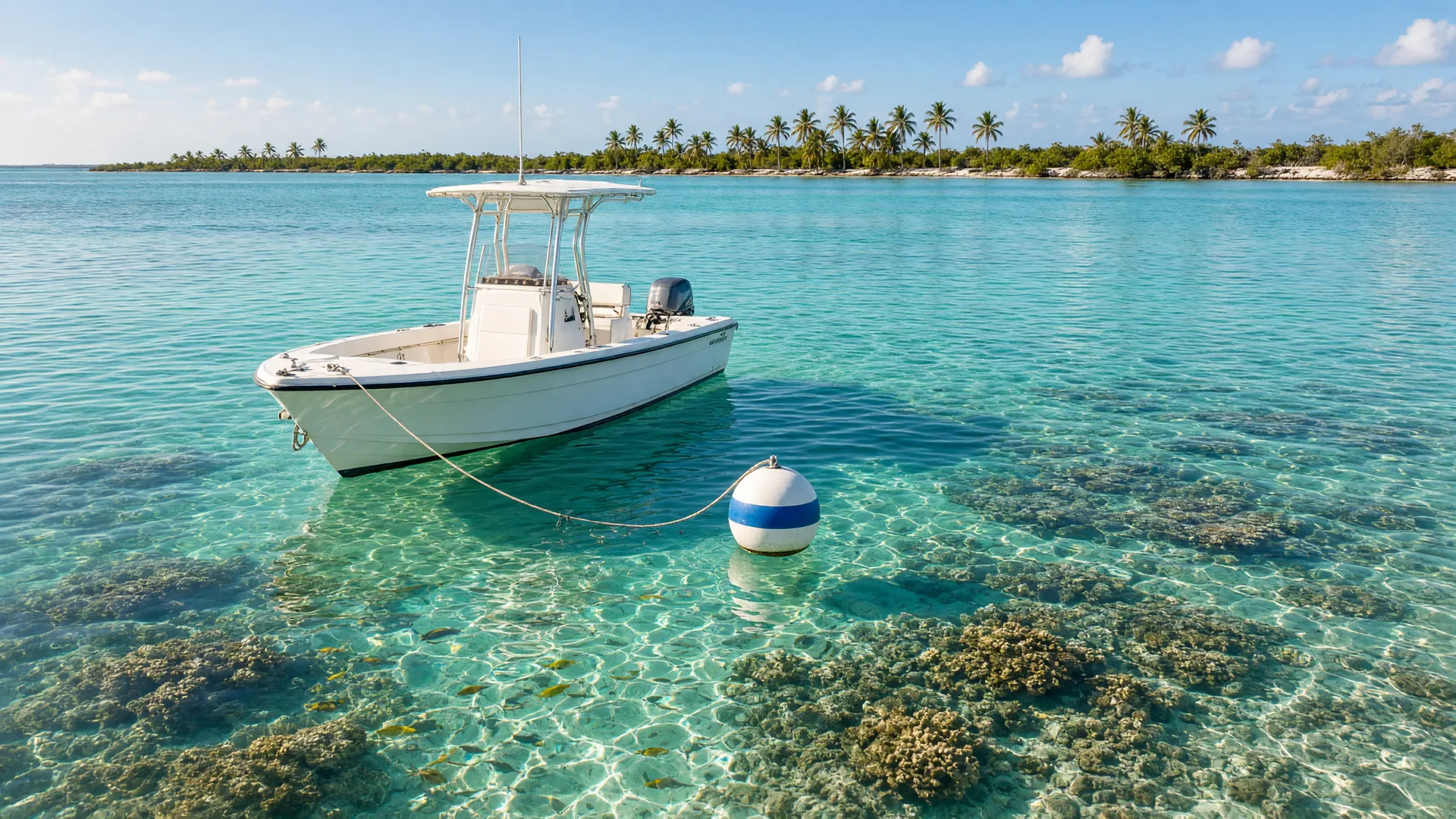
In the Florida Keys, NOAA maintains more than 600 mooring buoys throughout the sanctuary. These buoys are generally white spheres with a blue stripe and are available to boaters on a first-come, first-served basis at no cost.
There are different sizes depending on vessel requirements:
| Mooring buoy | Vessel capacity |
|---|---|
| 18-inch standard buoy | Up to 59 feet |
| 24-inch large buoy | 60–100 feet |
Larger mooring buoys are available at selected locations, including Looe Key SPA.
Why mooring buoys are important:
- They reduce anchor damage to coral reefs.
- They provide designated locations for securing boats.
- They help protect sensitive underwater habitats.
- They allow recreational boaters to enjoy reef areas more responsibly.
Boaters should use only the appropriate designated mooring buoy and follow NOAA's instructions for proper attachment.
Can Boaters Still Anchor Outside Sanctuary Preservation Areas?
Yes.
The 2027 SPA anchoring restriction does not create a sanctuary-wide ban on anchoring.
Outside designated no-anchor areas, boaters may still anchor where permitted, provided they follow sanctuary-wide regulations and other applicable state and federal rules.
For example, NOAA explains that when no mooring buoy is available and a vessel is outside a no-anchor zone, anchoring may be permitted in sandy areas away from coral and seagrass. However, anchoring on living coral is prohibited throughout the sanctuary.
Before dropping anchor, boaters should check:
- Whether they are inside an SPA.
- Whether the location is designated as a no-anchor area.
- Whether a mooring buoy is required.
- Whether the seabed contains coral or seagrass.
- Whether additional local restrictions apply.
A location that allows anchoring today may have different restrictions depending on its marine zone and the applicable 2027 regulations.
Does the New Rule Affect Fishing and Recreational Boating?
The anchoring change is only one part of the SPA regulations. Sanctuary Preservation Areas already have restrictions on fishing and collecting marine life.
Generally, the following activities are allowed:
- Boating and navigation.
- Diving.
- Snorkeling.
The following activities are generally prohibited:
- Fishing by any means, subject to specified exceptions.
- Removing or collecting marine life.
- Touching or standing on living or dead coral.
- Discharging prohibited materials.
- Anchoring contrary to SPA regulations.
Sand Key has a specific catch-and-release trolling exception, while other fishing exceptions have also changed under the Restoration Blueprint.
It is important to distinguish between boating through an SPA and engaging in activities that are prohibited within its boundaries. Anglers exploring the Keys without a boat can find designated bridges and shoreline access in our guide to shore fishing in the Florida Keys.
Why Is NOAA Introducing These Restrictions?
Coral reefs are among the most important natural resources in the Florida Keys.
They provide habitat for marine life, support recreational activities and contribute to the region's tourism and boating economy.
Anchors and chains can damage coral structures when they strike, drag across or become entangled with sensitive reef habitats. Even relatively small disturbances can affect fragile coral communities.
NOAA's Restoration Blueprint aims to improve protection for sensitive marine habitats while allowing recreational activities that are compatible with conservation. The updated regulations are part of a broader effort to reduce human impacts on the sanctuary's marine ecosystem.
What Should Boat Owners Know Before Visiting the Florida Keys in 2027?
If you regularly boat in the Florida Keys or plan to visit in 2027, preparation will be important.
- Check marine zone boundaries. Do not rely solely on familiar boating routes. Review the latest sanctuary maps and GPS information before heading out.
- Understand the mooring buoy system. Learn how to identify the white-and-blue mooring buoys and determine which ones are appropriate for your vessel.
- Plan your anchoring locations. If you intend to anchor overnight or stop for an extended period, verify that anchoring is permitted in the specific location.
- Know your vessel's dimensions. Mooring buoys have different vessel capacity limits. Make sure the designated buoy is suitable for your boat.
- Keep up with regulatory updates. Check NOAA announcements and official sanctuary regulations for any changes or clarifications.
These steps can help prevent accidental violations and protect the marine environment.
Boating access is also a big part of the waterfront buying decision. Questions about bridge clearances, community boating access, private dock value and canalfront versus oceanfront come up on almost every tour, and they are worth settling before you choose a property.
Where Can Boaters Check the Official Marine Zone Maps?
NOAA provides interactive maps showing SPA boundaries, mooring buoy locations and other protected marine areas.
These resources are particularly useful because zone boundaries may not always be obvious when approaching a reef by boat.
Recommended resources:
- NOAA interactive Sanctuary Preservation Area map
- NOAA mooring buoy locations
- NOAA sanctuary regulations
- Florida Fish and Wildlife Conservation Commission marine zone maps
- NOAA Restoration Blueprint FAQs
Yellow buoys generally mark protected zone boundaries. White buoys with a blue stripe identify mooring locations.
Do not tie your boat to a yellow boundary buoy. These are not mooring buoys.

Steve's Take
Steve Conley
Principal, Conley Sales Group at COMPASS
For anyone who enjoys boating in the Florida Keys, this is an important change to understand before planning trips in 2027.
The new restrictions will change how boaters use certain reef areas, particularly those accustomed to anchoring near popular snorkeling and diving locations.
The good news is that boating, diving and snorkeling will continue to be permitted within Sanctuary Preservation Areas, subject to the applicable regulations. Boaters will simply need to become more familiar with designated mooring locations and marine zone boundaries.
For waterfront homeowners and prospective buyers, these regulations are also worth understanding. Access to boating and nearby reef areas is an important part of the Florida Keys lifestyle, and marine conservation rules can influence how residents and visitors enjoy those resources.
The takeaway is simple: enjoying the Florida Keys waterways comes with a responsibility to protect the reefs that make this destination special. Knowing where you can anchor before leaving the dock helps you avoid violations and enjoy the water responsibly.
FAQs
Frequently Asked Questions
Can I anchor anywhere in the Florida Keys National Marine Sanctuary in 2027?
Which six SPAs are exceptions to the 2027 anchoring prohibition?
Can I use a mooring buoy inside an SPA?
Can I still snorkel and dive in Sanctuary Preservation Areas?
Can I fish inside an SPA?
Can I anchor outside an SPA in the Florida Keys?
Does the new regulation include power poles and push poles?
When exactly does the new anchoring prohibition begin?
Related Guides
Ask Steve: Boating and Waterfront in the Florida Keys
How Do Bridge Clearances Affect My Boat Access?
What to know about bridge clearances when choosing a Florida Keys home with boat access.
What Is the Best Florida Keys Community for Boaters?
Which Keys communities suit boaters best, from water depth and docks to open-water access.
How Much Value Does a Private Dock Add to a Florida Keys Home?
How a private dock and boating access affect Florida Keys property value.
What Is the Difference Between Canalfront and Oceanfront?
How canalfront and oceanfront properties compare for boating, privacy and value.
Shore Fishing in the Florida Keys: Best Spots and Tips
The best shore-fishing spots in the Keys, what you can catch and the rules to know.
Evaluating Marina Access and Boating Facilities
How to compare Florida Keys waterfront homes based on marina access, boat ramps, water depth and docking options.
Ask Steve
Related Ask Steve
References
Sources and Additional Information
- NOAA – Sanctuary Preservation Areas
- NOAA – Restoration Blueprint Frequently Asked Questions
- NOAA – Florida Keys National Marine Sanctuary Regulations
- NOAA – Mooring Buoy Program
- Federal Register – Florida Keys National Marine Sanctuary Final Rule, January 17, 2025
- Florida Fish and Wildlife Conservation Commission – Marine Zone Maps
Questions About Boating or Waterfront Living in the Keys?
Whether you are buying a waterfront retreat or selling your slice of paradise, boating access and marine regulations are part of the picture. Steve can help you evaluate a property's water access, dock and depth before you commit.