
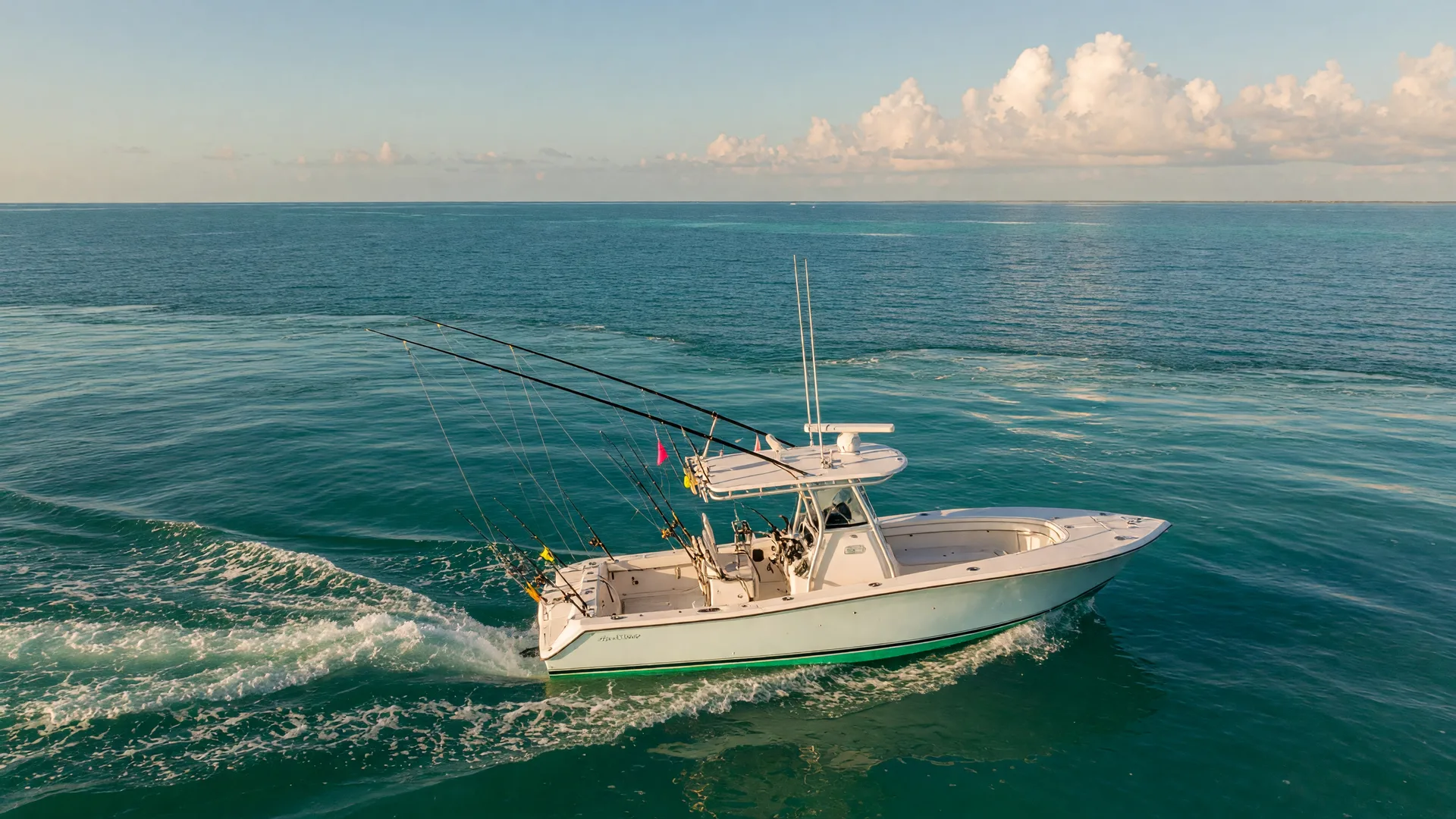
By Steve Conley, Principal of the Conley Sales Group at COMPASS
Sailfish Season in the Florida Keys: When It Starts, Where to Fish, and How to Catch One
Key Takeaways
- Sailfish are offshore in the Florida Keys year-round, but the marquee season runs roughly November through March, with peak action from December through February.
- October is the transition month: the first cold fronts push early sailfish onto the reef edge from Key Largo to Key West, and wahoo and blackfin tuna fishing heats up at the same time.
- Islamorada is known as the Sport Fishing Capital of the World, and the region is famous for kite fishing and a strong catch-and-release sailfish tournament culture.
- Florida FWC rules for Atlantic sailfish: 63-inch minimum (lower jaw to fork of the tail), one per harvester per day, open year-round, plus a Florida saltwater fishing license in state waters.
- Book your sailfish trip around a passing cold front and a moon phase for the most consistent bite from November through March.
When is sailfish season in the Florida Keys? Sailfish swim offshore here year-round, but the marquee season runs roughly from November through March, with the strongest action from December through February. October is the month it all starts: the first fall cold fronts push early sailfish onto the reef edge from Key Largo to Key West, and the winter fishery begins to build while wahoo and blackfin tuna fishing is already heating up.
That makes fall the best of both worlds for offshore anglers visiting Islamorada, Tavernier, Marathon, or anywhere along the island chain. You get the start of the sailfish run, plus some of the year's best variety offshore.
Here is what to know before you book, from timing and location to kite fishing and the regulations that keep the fishery healthy.
Meet the Fish: Florida's State Saltwater Fish
The sailfish deserves its reputation before you ever hook one. It is Florida's official state saltwater fish, and it is one of the fastest sights in the ocean: a raised sail, a tail-walking leap, and a color change from silver to electric blue and violet that happens in seconds.
Atlantic sailfish can reach about 11 feet in total length and close to 220 pounds at the extreme end, per Florida Fish and Wildlife Conservation Commission and Visit Florida references. The great majority of fish caught on recreational tackle in the Keys run about 6 to 7 feet and 30 to 50 pounds, which is plenty of fish for any angler. The current Florida state record is a 126-pound sailfish caught off Big Pine Key in 2009, a reminder that oversize fish still swim the Lower Keys grounds.
They also love warm, clear water, which is exactly what the reef edge from Key Largo to Key West offers almost year-round. Understanding the fish explains the fishery: sailfish are sight feeders that cruise the drop-offs, bait schools, and current edges where the forage stacks up, so that is where every guide in the Keys sets up.
When Is Sailfish Season in the Florida Keys?
Sailfish are not a seasonal visitor that disappears for half the year. They are offshore in the Keys year-round, which is exactly why local captains fish for them in every month on the calendar. What changes is the concentration and the quality of the bite.
- November through March: the prime window, when migrating sailfish stack up along the reef edge and the Gulf Stream color changes.
- December through February: the peak, with January traditionally the strongest month of the run.
- April and early May: a solid secondary push as fish move back through on their spring migration.
- October: the transition, when the first cold fronts of fall push early fish within reach and charters start shifting from summer species to the winter bite.
The mechanics matter more than the calendar. A passing fall cold front drops the water temperature a few degrees, and the change in conditions often triggers the most reliable sailfish bites of the season. Local captains watch the fronts the way skiers watch snow forecasts, because a fresh front is one of the best natural cues that the sailfish have moved in.
Where the Sailfish Action Happens
The Upper Keys are the heart of the fishery. Islamorada bills itself as the Sport Fishing Capital of the World, a title the official Florida Keys tourism site and the area's longtime fishing marinas both point to. Bud N' Mary's Marina on Islamorada's bayside has operated there since 1944, and a huge share of the region's sailfish charter fleet calls it home.
When the sails show up, captains look for the same features every winter:
- The reef edge along Hawk Channel: the drop-off where bait schools and the sailfish that chase them concentrate.
- Color changes in the Gulf Stream: the blue-water edges where the water clarity shifts and the bait stacks up.
- Named grounds like Alligator Reef and Molasses Reef: structure that holds bait, with Islamorada boats fishing the Alligator Reef grounds and Key Largo boats working Molasses Reef and the nearby ledges.
- Whale Harbor Channel and the cuts between the islands: natural funnels where water and bait move through.
Farther south, Marathon and Big Pine Key charters fish their own sections of the same offshore water, and Key West boats work the reef edge below the Lower Keys. Wherever you launch, the pattern is the same: find the bait, find the color change, and the sails are usually close behind.
How to Catch a Sailfish: Kite Fishing and Live Bait
The signature Keys technique is kite fishing, and it is as much a local tradition as it is a method. A kite flies a live bait suspended just above the surface, letting it skitter along the top of the water where a sailfish is already looking up. The skipping bait mimics the panicked action of a fleeing forage fish, and the presentation keeps the leader off the water where a wary sailfish might spot it.
The kite-bait approach was developed and refined around Islamorada's offshore grounds, and the region's light-tackle captains are still among the best in the world at it. On most trips you will also see:
- Live chumming: a steady stream of live pilchards or ballyhoo behind the boat to draw sailfish up from the reef.
- Trolling: spreader bars and rigged ballyhoo on the outriggers, especially productive on moon phases and after fronts.
- Teaser-and-dropback technique: when a sailfish shows behind the teaser, a mate drops a live bait in front of it and the angler lets the fish eat before setting the hook.
Say the word to any Keys charter captain and they will tell you the same thing: a sailfish on a kite bite is one of the most visual experiences in saltwater angling. The fish tail-walks, jumps, and paints the surface (the color change that gives the species its name) before anyone touches the rod.
The hookup itself is a teamwork drill. The mate pulls the teaser, the angler counts the drop, the rod loads up, and then the boat backs down hard to keep pressure on the fish. On the release, the mate grabs the leader with a gloved hand, the fish is revived boatside, and back it goes to the reef. Most Keys sailfish trips end with a photograph and a release, not a trip to the dock.
The Tournament Season: December in Islamorada
If you want to see the fishery at its most organized, time a visit for December, when Islamorada hosts the sailfish tournament circuit that anchors the winter. The Islamorada Sailfish Tournament, scheduled for its 63rd annual edition in December 2026, kicks off the Florida Keys Gold Cup Championship series, followed by events hosted by the Islamorada Fishing Club and the Cheeca Lodge Presidential Sailfish Tournament in Islamorada.
These tournaments are catch-and-release events at heart. Standings are tallied by sailfish releases, not by the scale, and the tag-and-release data they produce helps researchers track migrations and populations over time. Spectators can follow the live leaderboards from the marina bars and shop the tournament-weekend festivities around Bud N' Mary's and the Morada Way arts district.
What Else Is Biting in October
Book an October trip for the sailfish start, but go expecting a mixed offshore bag:
- Wahoo: October is one of the best wahoo months of the year, with high-speed trolling along the reef edge at first light and around moon phases.
- Blackfin tuna: excellent over offshore humps like the Marathon Hump, especially with live chumming and jigging at dawn.
- Dolphin (mahi-mahi): still present offshore as the summer peak winds down, often hanging around floating weed lines.
- Mutton and yellowtail snapper: consistent bottom action on the reefs while you wait for the sails to show.
- Bonefish and permit: the flats around Islamorada stay productive, though a hard cold front can move fish around for a day or two.
- King mackerel and tarpon: kingfish chase bait along the reef, and tarpon follow the fall bait migration through the passes.
Local fishing reports from Keys waters describe fall as the season of the bait migration, when big schools of pilchards, ballyhoo, and mullet push through the passes and practically every predator in the food chain shows up behind them. That migration is exactly why the sailfish start arriving in October, and it is why a fall charter often produces more species in one trip than a winter trip focused purely on sails.
It is worth repeating that October sits in a sweet spot. The summer crowds have thinned, the water is still warm, and the first fronts of fall have not yet stacked up. For a visitor with a few days on the water, October delivers variety that the peak winter months do not always match.
The Rules to Know Before You Go
Florida keeps the sailfish fishery simple to understand and well protected. For Atlantic sailfish, the current Florida FWC regulations are:
- Minimum size: 63 inches, measured from the tip of the lower jaw to the fork of the tail (lower jaw/fork length).
- Daily bag limit: one sailfish per harvester per day, counted within the overall billfish limits.
- Season: open year-round, with no closed season.
- License: a Florida recreational saltwater fishing license is required in state waters.
- Federal waters: a free open-access federal Atlantic HMS Angling Permit must be aboard the vessel.
- Handling: billfish may not be removed from the water except when they are being harvested.
That last rule is key to the fishery's health. The overwhelming practice in the Keys is catch-and-release, with tag-and-release programs woven through the local tournament circuit. The December tournaments, including the Islamorada Sailfish Tournament that kicks off the Florida Keys Gold Cup Championship, the Islamorada Fishing Club Sailfish Tournament, and the Cheeca Lodge Presidential Sailfish Tournament, tally their results by releases, not weigh-ins. The culture here is to fight the fish, photograph it boatside, and send it back to the reef.
Planning Your Sailfish Trip
The best advice from local captains is simple. Book November through March for the most consistent bite, aim for a window right after a cold front passes, and confirm the charter supplies the offshore tackle plus the federal HMS permit paperwork so you never have to think about it.
Where you base yourself shapes the trip as much as the dates. Islamorada, Tavernier, and Key Largo sit right on top of the Upper Keys reef edge, with charter fleets concentrated along Islamorada's bayside from Whale Harbor Channel south. Marathon offers its own fleet and the Marathon Hump a short run offshore, and the Lower Keys around Big Pine Key fish the same pattern below the Seven Mile Bridge. Whichever town you choose, an early start matters: the best sailfish bites of the day often happen at first light, and the evening window locals call the cocktail hour runs right before sunset.
Pack light, bring reef-safe sunscreen, and tell your captain what you want out of the day, whether that is a full kite-fishing education or a mixed bag with wahoo and blackfin tossed in. A quality mate will make the first bite feel effortless, and a slower day on the bridge still beats a good day in the office.
If you are weighing a trip for October, you are booking at the beginning of the run rather than the peak. Pair it with a wahoo or blackfin morning, and you will come home with stories either way.
And if you fall in love with the flybridge view, that is exactly how a lot of Keys homeowners started. The same water you fish today is the water you could be living on, with your boat tied to your own dock and the reef edge a short run from your back door.
FAQs
Frequently Asked Questions
When is sailfish season in the Florida Keys?
What are the Florida rules for keeping a sailfish?
Is October a good time to fish for sailfish in the Keys?
Where do sailfish charters fish in the Florida Keys?
Do Keys anglers keep sailfish or release them?
Site Navigation
Helpful Resources & Related Guides
Internal Links
Islamorada, Florida: A Guide to the Sport Fishing Capital of the World
Village-by-village guide to Islamorada, the heart of Upper Keys sailfishing.
Complete Guide to Fishing in the Florida Keys
Species, seasons, and techniques across the whole island chain.
Best Fishing Charters in the Florida Keys
How to pick the right offshore, flats, and backcountry charter.
Diving and Snorkeling in the Florida Keys
The reef system that sits just offshore from the sailfish grounds.
Contact Steve Conley
Questions about buying a Keys waterfront home or planning your trip?
External Helpful Sources
- Florida FWC: Billfish, Tuna, and Swordfish Regulations
Official state rules for size limits, bag limits, and fishing licenses.
- NOAA Fisheries: Atlantic HMS Angling Permit
The free open-access federal permit required for billfish in federal waters.
- Visit Florida Keys: Islamorada Fishing
The official Keys tourism guide to fishing in the Sport Fishing Capital.
Love the Water Enough to Live on It?
A Keys charter trip is a great weekend. A waterfront home with your boat at your own dock is a way of life. As a longtime local who holds a Florida contractor's license and home inspector license, Steve Conley evaluates waterfront properties with a detail most buyers never get. He can help you find the deep-water lot, the protected dock, and the right community for how you actually fish and boat.
We are committed to compliance with all federal, state, and local fair housing laws. We do not discriminate against any person because of race, color, religion, sex, national origin, familial status, or disability. Equal Housing Opportunity.