
Lifestyle · Diving & Snorkeling
The Florida Keys National Marine Sanctuary: A Complete Guide for Boaters, Divers, and Waterfront Buyers
Key Takeaways
- The Florida Keys National Marine Sanctuary was designated in 1990 and now protects 4,539 square miles of coastal, Gulf, and Atlantic waters around the island chain, according to NOAA.
- It protects the only living coral barrier reef in the continental United States, the largest documented contiguous seagrass community in the Northern Hemisphere, and nearly 6,000 species of marine life.
- A network of more than 600 white mooring buoys with blue stripes (part of a 900-plus buoy system) lets boaters tie up at reef and wreck sites instead of anchoring on coral. The program began at Key Largo in 1981.
- About 6 percent of the sanctuary sits inside fully protected no-take zones, including 22 Sanctuary Preservation Areas, where fishing, collecting, and spearfishing are off limits.
- From John Pennekamp Coral Reef State Park off Key Largo to Sand Key off Key West, the sanctuary is the reason the Keys reef, and the boating and diving lifestyle built on it, stays world class.
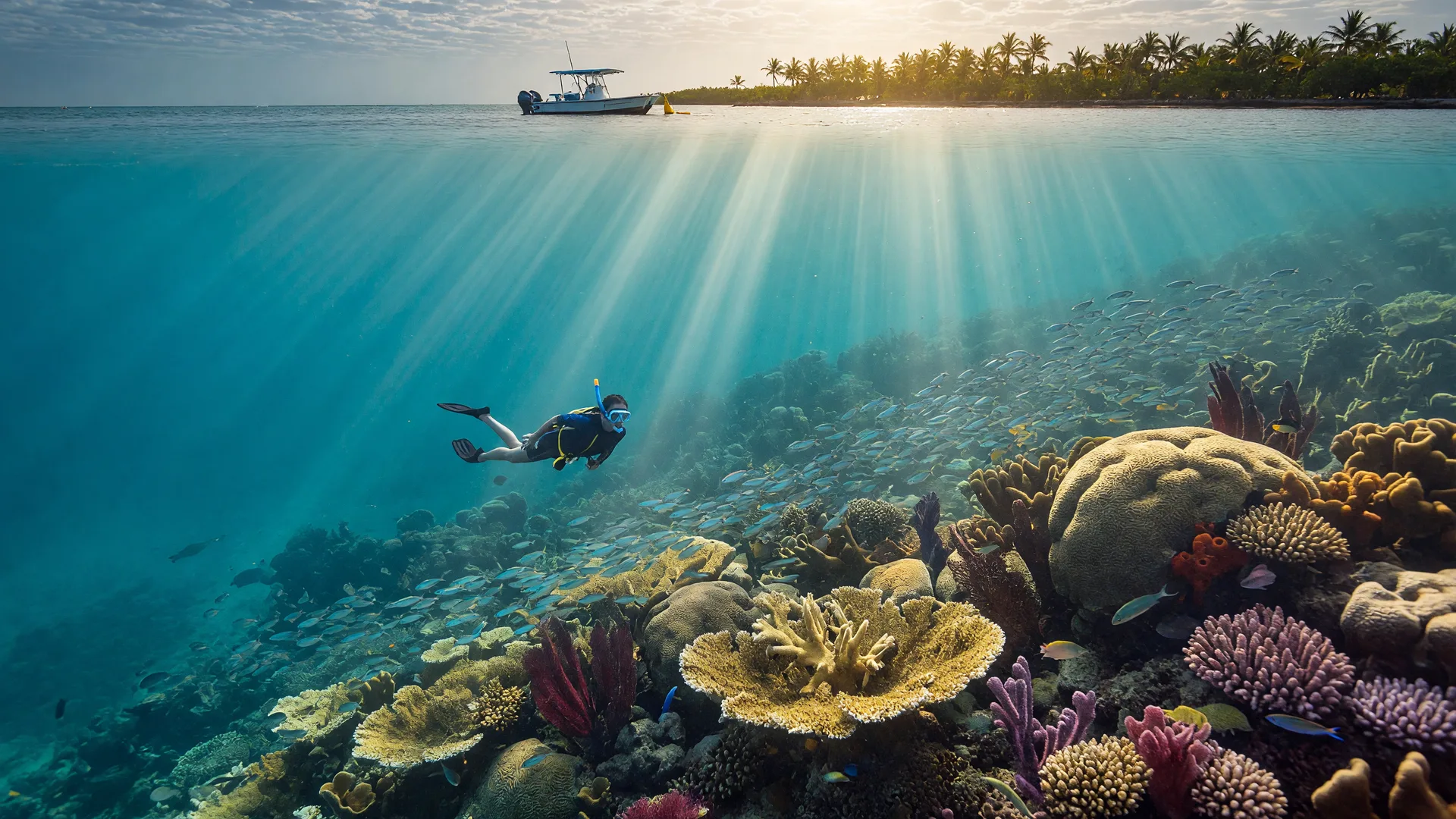
What is the Florida Keys National Marine Sanctuary? It is the federally designated marine protected area that surrounds the entire island chain, created in 1990 to safeguard the only living coral barrier reef in the continental United States. NOAA now manages roughly 4,539 square miles of coastal, Gulf, and Atlantic waters around the Keys, working with the state of Florida. For anyone who boats, dives, snorkels, fishes, or is considering waterfront property here, the sanctuary is the single most important thing to understand about the water, because its rules shape where you can anchor, where you can fish, and how the reef stays healthy for the next generation of owners and visitors.
I have spent more than 30 years living and working in the Florida Keys, holding a Florida contractor's license and a home inspector license on top of my real estate license, and I read waterfront property on the water and on the paperwork. This guide walks through why the sanctuary exists, how big it is, the mooring buoys, the no-take zones, the best reef sites by community, and what all of it means for buyers looking at a home with a seawall.
Why the Sanctuary Exists
Congress created the sanctuary on November 16, 1990, when President George H.W. Bush signed the Florida Keys National Marine Sanctuary and Protection Act into law. It followed a string of coral reef boat groundings in 1989 and years of concern about the health of the reef tract. The result is a protected area that runs the length of the Keys, jointly managed by NOAA and the state of Florida, with rules that apply to everyone on the water, residents and visitors alike.
The ecosystem at stake is genuinely one of a kind. The sanctuary holds the only living coral barrier reef in the continental United States and the third largest barrier reef in the world. It also protects the largest documented contiguous seagrass community in the Northern Hemisphere, dense mangrove shorelines, an estimated 6,000 species of marine life, and more than 1,000 shipwrecks and other submerged cultural sites. Those numbers come from NOAA's official sanctuary pages, which are the best place to check the current boundaries and regulations.
How Big Is the Sanctuary?
The sanctuary is huge by any measure. NOAA states on its official site that the sanctuary today protects 4,539 square miles, a boundary that grew by roughly 20 percent when the agency's Restoration Blueprint took effect in early 2025. The protected water wraps around the entire island chain, from the Atlantic side of Key Largo down through the reef tract, across Florida Bay, and out toward the Dry Tortugas. For a buyer looking at waterfront property, the practical effect is that most of the water you can see from a backyard seawall is sanctuary water, and the rules that protect it are part of everyday Keys life.
The Mooring Buoy Program: Anchoring Without Damage
One of the sanctuary's most useful features for boaters is its mooring buoy program. It started at Key Largo in 1981 and now includes more than 600 white, blue-striped buoys within a network of over 900 buoys, managed by NOAA. The idea is simple: at popular reef, wreck, and dive sites you tie the boat to a mooring buoy on a first-come, first-served basis instead of dropping anchor. Anchors and anchor chains break coral and scar the reef, so the buoys protect the ecosystem while still letting everyone enjoy the best sites. It is one of the most boat-friendly systems anywhere, and the buoys are maintained by the sanctuary specifically so the reef stays diveable and snorkelable for decades.
No-Take Zones and Sanctuary Preservation Areas
Not all sanctuary water is managed the same way. The 1997 zoning plan created 22 Sanctuary Preservation Areas, or SPAs, plus research-only areas and two large ecological reserves, where fishing and harvesting are banned entirely. Together these no-take zones cover roughly 6 percent of the sanctuary. In a Sanctuary Preservation Area you can swim, snorkel, and dive, but you cannot fish, collect, or spear anything, and you tie up to a mooring buoy rather than anchoring. The protected zones act as nurseries that keep fish populations healthy in the surrounding water, which is why the fishing just outside them stays so good. The sanctuary publishes zone maps online, and every charter captain in the Keys knows the boundaries cold.
Top Spots by Community
The sanctuary delivers its best experiences at a string of named sites you can reach from every major Keys community:
Key Largo and Tavernier: John Pennekamp Coral Reef State Park at Mile Marker 102.5 was the first undersea park in the United States when it opened in 1963, and it protects roughly 70 square nautical miles of Atlantic reef. Molasses Reef, a celebrated spur-and-groove reef in about 10 to 40 feet of water, is among the most dived reefs in the country, and the Christ of the Abyss statue at Key Largo Dry Rocks stands in about 25 feet of water for snorkelers and divers alike.
Islamorada: Alligator Reef, named for the 1860 wreck of the USS Alligator, is one of the most iconic sites in the Upper Keys, with the famous lighthouse marking the reef. The Islamorada sandbar and the flats along Windley Key and Indian Key offer calm, shallow water for snorkeling, paddling, and family days on the boat.
Marathon and the Middle Keys: Sombrero Reef sits just offshore of Sombrero Beach and is a classic reef trip with mooring buoys, clear shallow water, and a well-marked spur-and-groove structure. The historic Seven Mile Bridge is the visual anchor of the area, and the flats around Duck Key and Grassy Key hold some of the best seagrass habitat in the chain.
Big Pine Key and the Lower Keys: Looe Key, reached from the Lower Keys near Big Pine Key and Bahia Honda, is one of the sanctuary's best-known reef dives, protected within the no-take system. The National Key Deer Refuge and Bahia Honda State Park frame the shoreline above it.
Key West: Sand Key Reef and the reefs of the Key West National Wildlife Refuge round out the sanctuary's western end, with Fort Zachary Taylor State Park offering the most convenient swim-in snorkeling in the city.
Each of these sites is a short boat ride from its community, which is exactly why they matter so much to how people actually live in the Keys. My diving and snorkeling guide breaks down the top reef trips in detail, and the boating and marinas guide covers the launch points and marina access.
Rules Every Boater and Angler Should Know
The day-to-day rules are easy to follow if you know the basics. Use the mooring buoys at reef and wreck sites instead of anchoring on coral, and never touch, stand on, or break coral. Fishing and collecting are off limits inside the no-take zones and Sanctuary Preservation Areas, and everywhere else they follow the bag and size limits set by the Florida Fish and Wildlife Conservation Commission. Spearfishing is restricted in sanctuary zones, and lobster and stone crab seasons are governed by FWC. It is worth checking the sanctuary's official site before a trip, because boundaries and seasonal rules can change.
Planning a Day on the Reef
A classic reef day in the Keys does not require much advance planning, which is part of its appeal. Pick a site from the list above, confirm the weather is calm, and decide whether you want a guided trip or your own boat. Guided options are everywhere: dive and snorkel charters run daily out of Key Largo, Islamorada, Marathon, and Key West, and glass-bottom boats at John Pennekamp let everyone in the group see the reef without getting wet. If you take your own boat, carry the sanctuary's zone map, arrive early in the season to claim a mooring buoy, and be ready to move if the site is full. Sunscreen that is reef-safe, water, a hat, and a dive flag for snorkelers round out the kit. Morning trips typically deliver the calmest water and the clearest light, and they leave the afternoon free for lunch dockside or a slow run across Florida Bay.
The Sanctuary and the Real Estate Connection
The sanctuary is a genuine quality-of-life feature for waterfront buyers, and it is one of the details I point out on showings alongside dockage, water depth, and seawall condition. A home with a deep-water canal in Key Largo or Islamorada puts you minutes from a mooring buoy, a reef, or a flats fishing ground that is protected by federal law, which means the water in front of the house will not be dredged, built over, or overfished. For buyers weighing communities, that permanence is real value.
Each community has its own water character within the sanctuary. My Key Largo community guide covers Pennekamp and the reef access at the top of the chain, the Islamorada community guide covers Alligator Reef and the sandbar, and the Marathon community guide covers Sombrero Reef and the Middle Keys flats. The Big Pine Key community guide covers Looe Key and the Lower Keys. If the dream is a home where the weekend starts with a short run to the reef, that is a lifestyle I can help you find, and my buying guide explains the practical steps to getting there. For fishing-specific buyers, the fishing charters guide rounds up the captains who know the sanctuary's boundaries better than anyone.
Steve's Bottom Line
The Florida Keys National Marine Sanctuary is the reason the Keys water looks the way it does, and understanding it makes every boating, diving, and fishing trip better. Tie to a mooring buoy, respect the no-take zones, check the FWC rules, and the reef will take care of the rest.
And if a day on the reef makes you start wondering what it would be like to live here, that is a conversation I would love to have. Call me at (305) 393-5859 or send a note through the contact page, and we can talk about the communities, the waterfront homes, and the water you could be on every weekend of the year.
Frequently Asked Questions About the Florida Keys National Marine Sanctuary
What is the Florida Keys National Marine Sanctuary?
It is the federally protected marine area around the entire island chain, designated in 1990 and now covering 4,539 square miles of coastal, Gulf, and Atlantic waters. It protects the only living coral barrier reef in the continental United States and is managed by NOAA with the state of Florida.
Do I need a permit to snorkel or dive in the sanctuary?
No. Recreational boating, snorkeling, and diving are open to everyone. At reef and wreck sites you tie up to a mooring buoy instead of anchoring, and inside no-take zones you swim and look but do not fish, collect, or spear.
Can I anchor anywhere in the Florida Keys?
At popular reef and wreck sites the sanctuary asks you to use the mooring buoys rather than anchoring, because anchors break coral. Anchoring is allowed in many sandy areas, but the safest and easiest choice at a named site is always the buoy.
What is a Sanctuary Preservation Area?
It is one of 22 fully protected zones in the sanctuary where fishing, collecting, and spearfishing are prohibited. You can still snorkel, dive, and swim there, and the protected fish populations help keep surrounding waters productive.
Where is the best reef snorkeling from Key Largo?
John Pennekamp Coral Reef State Park is the classic answer, with Molasses Reef and the Christ of the Abyss statue in shallow, clear water. Charter boats and glass-bottom tours leave from the park and nearby marinas throughout the day.
Helpful Resources & Related Guides
Internal Resources
- Key Largo Community Guide · John Pennekamp, Molasses Reef, and reef access at the top of the chain
- Islamorada Community Guide · Alligator Reef, the sandbar, and Upper Keys flats
- Marathon Community Guide · Sombrero Reef and the Middle Keys
- Big Pine Key Community Guide · Looe Key and the Lower Keys
- Diving and Snorkeling in the Florida Keys · The top reef trips and sites across the sanctuary
- Boating and Marinas in the Florida Keys · Launch points, dockage, and getting on the water
- Buying Guide · The practical steps to buying a Keys home
- Contact Steve Conley · Talk to a local agent about making the Keys home
External Resources
- Florida Keys National Marine Sanctuary, NOAA · Official boundaries, zone maps, and regulations
- NOAA Mooring Buoy Program · Buoy locations and how to use the system
- John Pennekamp Coral Reef State Park, Florida State Parks · Park facts, hours, and reef trip options
- Florida Fish and Wildlife Conservation Commission · Fishing, lobster, and stone crab rules in Keys waters
Local anchors: John Pennekamp and Molasses Reef off Key Largo, Alligator Reef off Islamorada, Sombrero Reef off Marathon, and Looe Key off Big Pine Key are the landmarks that define the sanctuary's best reef days.
Ready to Make the Reef Your Everyday Life?
Whether you want to be minutes from the mooring buoys off Key Largo or a short run from Sombrero Reef in Marathon, Steve Conley can help you find the waterfront home that fits how you live on the water. Call (305) 393-5859 or send a note through the contact page.

Steve Conley
Principal, Conley Sales Group at COMPASS · License #3232648
Thinking About Buying or Selling in the Florida Keys?
Whether you're buying your first waterfront home, selling a luxury property, or simply want to know what your home is worth, I'm here to help. As a local Compass REALTOR, I provide expert guidance, market insights, and personalized advice throughout the Florida Keys.
We are committed to compliance with all federal, state, and local fair housing laws. We do not discriminate against any person because of race, color, religion, sex, national origin, familial status, or disability. Equal Housing Opportunity.
Draft for review · not published, not indexed