
Boating Lifestyle in the Florida Keys: Marinas, Destinations, and Tips
Key Takeaways
- The Florida Keys offer some of the best boating in the continental United States, with access to the only living coral reef tract, abundant flats, and world-class fishing grounds.
- Key Largo is the boating gateway with major marinas like Marina Del Mar and John Pennekamp State Park, plus public ramps at Manatee Creek and Point Laura.
- Islamorada is home to Plantation Yacht Harbor Marina, named a Top 50 Marina Destination in the World by Yachting Magazine, and offers exceptional access to both offshore reefs and backcountry flats.
- Marathon serves as the Middle Keys boating hub with approximately 2,400 wet and dry slips, plus the Boot Key Harbor mooring field managed by the City of Marathon Marina.
- Living the Keys boating lifestyle starts with choosing the right waterfront property. Understanding dockage, water depth, and canal access is essential before making a purchase.
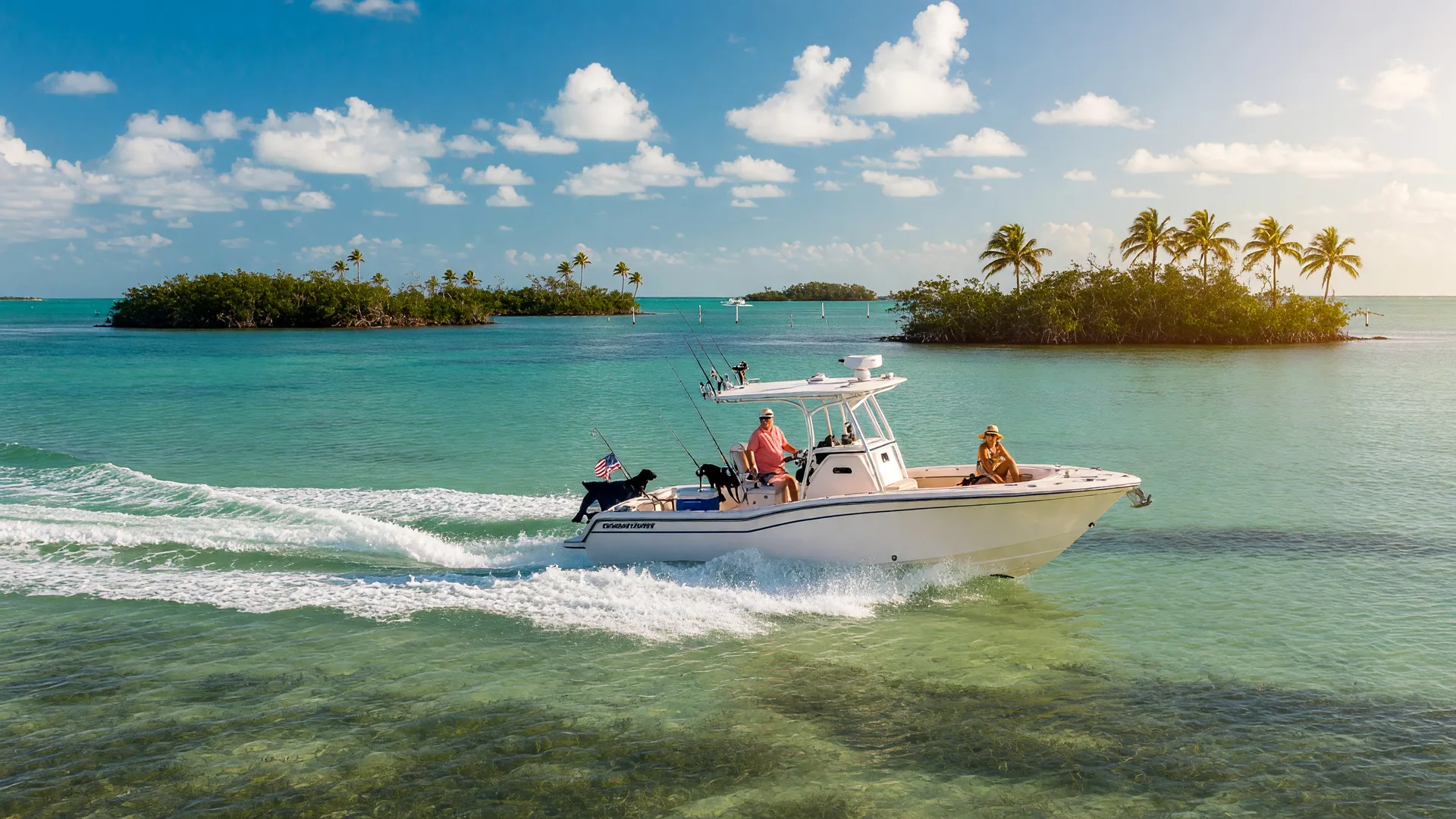
The Florida Keys are one of the best places in the country to embrace a boating lifestyle. With 112 miles of island chain stretching from Key Largo to Key West, protected waters on both the Atlantic and Florida Bay sides, year-round warm weather, and the only living coral reef system in the continental United States, the Keys are built around life on the water. When you live here, a boat is less a luxury and more a way of getting around, connecting to the best fishing, dining, and island experiences the chain has to offer.
This guide covers everything you need to know about the boating lifestyle in the Florida Keys. Whether you are a seasoned captain relocating to the islands or a first-time boat owner drawn by the promise of sunset cruises and weekend sandbar gatherings, understanding the marinas, ramps, destinations, and waterfront property considerations will help you get the most out of Keys living.
Why the Florida Keys Are a Boater's Paradise
The Keys sit within the Florida Keys National Marine Sanctuary, a protected area spanning 2,900 square nautical miles of coral reefs, seagrass meadows, and mangrove forests. Water temperatures range from the low 70s in winter to the mid-80s in summer, making year-round boating comfortable. The chain's geography creates naturally protected waters on the Gulf of Mexico and Florida Bay sides, while the Atlantic side offers direct access to deep water, offshore fishing grounds, and the Gulf Stream.
What truly sets the Keys apart is variety. In a single day on the water you can drift over shallow grass flats stalking bonefish, anchor at a coral reef to snorkel among tropical fish and elkhorn coral, cruise through protected mangrove tunnels in the backcountry, and end the afternoon tied up at a waterfront tiki bar watching the sun set over the Gulf. Few places on earth offer that range of experiences within a short boat ride.
For buyers considering a move to the Keys, the boating lifestyle is often the deciding factor. The ability to step off your backyard dock onto your boat and be fishing on the reef or dining at a waterfront restaurant within 10 to 15 minutes is the defining experience of Keys living. Our waterfront living guide covers the types of canal and open-water properties available across the islands.
Key Largo: The Boating Gateway
Key Largo is the northernmost Keys community and the first stop for boaters arriving from the mainland. At Mile Marker 107 down to Mile Marker 94, Key Largo sits closest to the continental reef tract, meaning less travel time to reach world-class diving and fishing spots than anywhere else in the chain. The community calls itself the Dive Capital of the World, and the boating infrastructure reflects that reputation.
Notable Marinas in Key Largo
Marina Del Mar at 527 Caribbean Drive is one of the largest full-service marinas in the Upper Keys, offering transient and long-term dockage, fuel, mechanical services, and a popular waterfront restaurant. Blue Fin Rock Harbor Marina at Mile Marker 103.5 has about 50 slips with electric and water hookups, a ship's store, and easy access to the Atlantic. Key Largo Kampground Marina at Mile Marker 101.5 provides both dockage and nearby camping for those traveling with an RV.
John Pennekamp Coral Reef State Park at Mile Marker 102.5 operates its own marina and runs daily snorkel and dive tours to the offshore reef sites. The park's protected waters and shallow reefs make it an ideal destination for new boaters and families. For boat owners needing long-term storage or repairs, Key Largo Boat Yard and Storage on the bayside offers a paved launch ramp and full maintenance services.
Public Boat Ramps
For boaters who trailer their vessels, Key Largo has several public ramp options. Manatee Creek on US-1 north of Morris Avenue offers a two-lane concrete ramp with limited parking. Point Laura Marina at 999 Morris Lane has a ramp with trailer parking and dock space for loading and unloading. Note that the commercial campground portion previously operating under the "Point Laura Marina & Campground" name is currently listed as a closed campground business. However, the local boating access point at 999 Morris Lane still exists physically, and the boat ramp location remains accessible for launching and retrieving vessels. The Harry Harris Park ramp in the Port Largo neighborhood provides calm-water access to Tarpon Basin, a popular cruising area with deep water and scenic mangrove shorelines. Check the Key Largo community guide for more details on local boating access points.
Islamorada: The Sportfishing Capital at Sea Level
Islamorada, stretching from Mile Marker 90 down to Mile Marker 70, is known around the world as the Sportfishing Capital of the World. Its position at the edge of the Gulf Stream means the offshore canyon is closer here than anywhere else in the Keys, while the Florida Bay side offers miles of shallow-water flats that host tarpon, bonefish, and permit. The boating lifestyle in Islamorada revolves around fishing, and the marina infrastructure is built accordingly.
Plantation Yacht Harbor Marina
Plantation Yacht Harbor Marina, located at the former Plantation Key and now operated by the Village of Islamorada, has been named a Top 50 Marina Destination in the World by Yachting Magazine. The marina offers 190 wet slips accommodating vessels up to 60 feet, fuel docks with both gasoline and diesel, a ship's store, and full restroom and shower facilities. It is situated just off the Atlantic, giving boats quick access to the reef in under 10 minutes. The marina also hosts the annual Islamorada Fishing Club tournaments and serves as a departure point for many local charter captains. Find it in the Islamorada Community Guide.
Other Notable Marinas in Islamorada
For offshore fishing charters, the three primary departure points in Islamorada are Caloosa Cove Marina at Mile Marker 73.5, Whale Harbour Marina at Mile Marker 82, and Bud N' Mary's Marina at Mile Marker 79.8. These historic marinas are where the bulk of the village's offshore charter fleet operates, with seasoned captains running trips to the Gulf Stream, the reef, and the deep-water wrecks that put Islamorada on the sportfishing map.
Caloosa Cove Marina offers full-service dockage, fuel, and a ships store, and its fleet targets sailfish, mahi-mahi, wahoo, and tuna beyond the reef. Whale Harbour Marina provides similar amenities with transient slips and a well-regarded charter fleet of its own. Bud N' Mary's Marina, one of the oldest and most famous sportfishing marinas in the Keys, has been operating a fleet of charter boats for generations and continues to provide fuel, bait, and tackle for DIY anglers.
Anglers targeting tarpon, bonefish, and permit on the Florida Bay flats typically launch from Lorelei's Marina at Mile Marker 82, which provides direct access to the backcountry. The Marina at Amara Cay Resort at Mile Marker 80 offers transient dockage with resort amenities for visiting boaters. Bayside Marina at World Wide Sportsman on the Florida Bay side provides dockage for smaller vessels and easy access to the backcountry flats. Plantation Yacht Harbor Marina also serves as a departure point for charter captains and tournament events.
Founders Park at Mile Marker 87 on the bayside offers a public boat ramp that charges a modest fee for non-residents. It provides ample trailer parking and access to the protected Florida Bay side, making it a favorite for kayakers and small boat owners who want to explore the mangrove islands without crossing to the ocean side. Sea Bird Marina at Mile Marker 69.5 also offers ramp access and seasonal dockage.
Marathon: The Middle Keys Boating Hub
Marathon, located roughly at Mile Marker 65 to Mile Marker 47, sits at the midpoint of the island chain and is the largest population center in the Keys after Key West. Its central location makes it a natural base for boaters who want to explore both the Upper and Lower Keys without long runs. The boating infrastructure here is extensive, with approximately 1,200 wet slips and 1,200 dry storage slips available across the community.
Boot Key Harbor and the Marathon Marina
The City of Marathon Marina at 800 35th Street, Mile Marker 49, manages the Boot Key Harbor mooring field, one of the largest in the Keys. Boot Key Harbor is a protected natural harbor on the bayside with over 200 mooring balls available for transient and liveaboard cruisers. The marina offers fuel, pump-out service, laundry, showers, and a dinghy dock with easy walking access to the restaurants and shops on 35th Street and Overseas Highway. The mooring field is a popular stop for cruisers transiting the Keys on the Great Loop route.
Marathon also has several private marinas and yacht clubs. Marathon Marina & Boatyard at Mile Marker 49 provides full-service repairs, haul-out capabilities, and long-term dockage. The Faro Blanco Marine Resorts at Mile Marker 49.5 offers resort-style dockage with a hotel, restaurant, and pool access for transient boaters. The Keys Fisheries & Marina at Mile Marker 49.5 is a working waterfront with a seafood market, dockside eatery, and live music on weekends.
Public Boat Ramps in Marathon
The City of Marathon operates the 33rd Street Gulf Ramp on the ocean side, which charges $25 to launch and $25 for retrieval. The ramp has paved parking for vehicles with trailers. The Crawl Key Ramp at approximately Mile Marker 53.5 provides alternate access for smaller boats. The North Marathon Shores Ramp at Aviation Boulevard and Harbor Drive offers a quieter launch point on the bayside. Visit the Marathon Community Guide for exact directions and seasonal hours.
Boating Destinations Every Keys Boater Should Know
Sandbars and Rooftop Parties
Summer weekends in the Keys are defined by the sandbar scene. The best-known sandbars include the area near Rodriguez Key off Key Largo, the sandbar at Whale Harbor Channel near Islamorada (Mile Marker 82), and the sandbar at Boot Key Channel near Marathon. For the full rundown on where to anchor, what to bring, and when to go, read our guide to the best sandbars in the Florida Keys. And for more weekend activity ideas and events, check out our latest Keys weekend guide. Boaters anchor in waist-deep water, tie up together, and spend the afternoon swimming, grilling, and listening to music. These gatherings are family-friendly during the day and evolve into sunset socials as the afternoon winds down.
World-Class Fishing Grounds
For anglers, the variety of fishing available from a Keys boat is unmatched. The reef line runs parallel to the island chain about 3 to 6 miles offshore, producing yellowtail snapper, mangrove snapper, grouper, and hogfish. Beyond the reef, the Gulf Stream brings pelagic species including sailfish, wahoo, mahi-mahi, and blackfin tuna. On the Florida Bay side, the backcountry flats hold tarpon, bonefish, and permit, with the best action from April through June. Our Complete Guide to Fishing in the Florida Keys has detailed information on targeting each species.
Diving and Snorkeling from Your Boat
Owning a boat in the Keys means you have independent access to the best dive sites at your own pace. Popular spots include the Christ of the Abyss statue at Key Largo Dry Rocks, Molasses Reef off Key Largo, Hens and Chickens Reef near Islamorada, Coffin's Patch off Marathon, and Looe Key Reef near Big Pine Key. Having your own boat lets you arrive early before the tour boats, and move between sites as conditions change. For more on the best underwater spots, read our diving and snorkeling guide.
Waterfront Dining Accessible Only by Boat
Some of the best dining experiences in the Keys are accessible only or primarily by water. Alabama Jack's at Mile Marker 7 on Card Sound Road is a beloved Keys institution with a dock for boaters, serving conch fritters and cold beer in a screened-in setting overlooking the water. Burdines Waterfront in Marathon has a marina alongside its tiki bar and grill, and is a favorite stop for boaters cruising Boot Key Harbor. Lazy Days Restaurant in Islamorada, accessible by boat as well as by land, offers fresh seafood with a dining room that floats on the water. Our waterfront dining guide covers more recommendations from Key Largo to Marathon.
Tips for Buying Waterfront Property with a Boat
Living the boating lifestyle in the Keys starts with choosing the right property. Not every canal in the Keys provides the same level of boating access, and understanding the differences before you buy will save you frustration later. As a licensed contractor and home inspector, I evaluate these waterfront factors during every property tour. Learn more about the advantage of three licenses in our contractor inspector agent article. Here are the key considerations:
Canal depth and tidal range. Many canals in the Keys were dredged decades ago and have filled in over time. Ask for recent depth surveys and check whether the canal connects to open water without passing through restrictive bridge clearances. Some canals in the Upper Keys have controlling depths of only 2 to 3 feet at low tide, which limits their usefulness for vessels with deeper drafts.
Open-water access versus canal living. Homes on open water (canal-front properties with direct access to the bay or ocean without navigating a canal system) command a premium, and for good reason. You can step onto your boat and be under way immediately. Canal homes can offer great value and protection from weather, but the time to transit the canal to open water can range from 5 to 30 minutes depending on the length and bridge configuration.
Bridges and air draft. If you own a sailboat or a vessel with a tower, you need to check the air draft of every bridge between your dock and open water. Many fixed bridges in the Keys have clearances of 12 to 20 feet, and if your mast or tower exceeds that height, you will be restricted to the area between the bridges. Some communities, such as portions of Key Largo's Port Largo area, have no-bridge access to the Atlantic.
Seawall condition. A deteriorating seawall is an expensive repair, often costing $1,000 or more per linear foot to replace. During a home inspection, have the seawall evaluated for cracks, leaning, and erosion behind the wall. As a licensed home inspector and contractor, I always flag seawall issues during property evaluations so my clients know exactly what they are taking on. The Keys Buying Guide has more detail on what to look for during the purchasing process.
Operating Responsibly on Keys Waters
The Florida Keys National Marine Sanctuary has specific rules that every boater should know. Speeding in manatee zones, damaging seagrass beds with propellers, and anchoring on coral are all prohibited and carry substantial fines. The seagrass meadows that surround the Keys are critical nursery habitat for fish and crustaceans. Pole or push through shallow grass flats instead of running your engine. Use mooring balls at popular dive and snorkel sites instead of anchoring. Follow the "no wake, no take" principle in protected zones. The sanctuary's health depends on every boater doing their part.
Florida Fish and Wildlife Conservation Commission officers patrol Keys waters regularly, and they enforce boating safety laws, fishing regulations, and lobster season limits. During Lobster Mini Season (July 29 through 30 this year), the enforcement presence increases significantly. Make sure your vessel is properly registered, your safety equipment is up to date, and everyone on board knows where the life jackets are stored.
Frequently Asked Questions
Do I need a special license to operate a boat in the Florida Keys?
Florida law requires anyone born on or after January 1, 1988 to complete a Boater Safety Education course approved by the Florida Fish and Wildlife Conservation Commission before operating a vessel with 10 horsepower or more. The course is available online and the card is valid for life. All boat operators, regardless of age, should carry their boater safety card and vessel registration while on the water. Non-residents operating a boat in Florida must also meet this requirement or provide proof of a comparable course from their home state.
What is the best type of boat for the Florida Keys?
The most popular boat type in the Keys is the center-console boat, typically 22 to 35 feet long. These boats offer the versatility to fish the reef, cruise to sandbars, and handle moderate offshore conditions. Shallow-draft skiffs and bay boats are preferred for backcountry flats fishing, where you typically need to pole through water less than 2 feet deep. Cruisers and trawlers in the 35- to 50-foot range are common among liveaboard owners and those who spend extended time on the water. The right boat for you depends on how you plan to use it, but a center-console in the 24- to 28-foot range is the most versatile choice for most Keys boaters.
How much does marina dockage cost in the Florida Keys?
Dockage rates vary widely by location, season, and amenities. Annual wet slips in Key Largo typically range from $12 to $18 per foot per month. Transient rates for overnight dockage range from $2.00 to $3.50 per foot per night. Dry storage is generally more affordable, ranging from $8 to $12 per foot per month. Marathon's Boot Key Harbor mooring balls offer a more budget-friendly option at approximately $350 to $500 per month for liveaboard cruisers, with discounts for shorter stays. Rates tend to be higher in Islamorada and Key Largo during peak winter and fishing season months.
What should I look for in a waterfront home for boating access?
Start with canal depth and bridge clearance. A working dock needs at least 3 to 4 feet of depth at mean low tide for a typical center-console boat. Check whether the canal has a direct connection to open water or requires passing under bridges, and measure the air draft of those bridges against your vessel's height. Seawall condition, dock age and construction material, and the presence of shore power and freshwater at the dock are also important. A property that needs significant dock or seawall work can add $30,000 to $100,000 or more to your costs. Our waterfront living guide covers these factors in more detail.
Can I keep a liveaboard boat at a marina in the Florida Keys?
Yes, but liveaboard policies vary by marina and county. Monroe County regulates liveaboard vessels and limits the number of people who can live aboard in certain areas. Some marinas, like Boot Key Harbor in Marathon, welcome liveaboard cruisers with designated mooring fields and full facilities. Other marinas restrict liveaboard status or do not allow it at all. Always ask about the marina's liveaboard policy before signing a dockage agreement, and check county regulations for the specific area where you plan to stay.
Helpful Resources & Related Guides
Internal Resources
- Key Largo Community Guide — The boating gateway to the Florida Keys with major marinas and public ramps
- Islamorada Community Guide — Home to Plantation Yacht Harbor and world-class fishing grounds
- Marathon Community Guide — The Middle Keys boating hub with Boot Key Harbor and extensive slip inventory
- Waterfront Living in the Florida Keys — Canals, docks, and open-water access considerations for boaters
- Complete Guide to Fishing in the Florida Keys — Target species and fishing grounds accessible by boat
- Florida Keys Buying Guide — Navigate the waterfront property purchase with confidence
- Contact Steve Conley — Get in touch about Keys waterfront real estate
External Resources
- Florida Realtors — Official professional association for Florida real estate professionals
- FWC Boating and Waterways — Boating safety courses, vessel registration, and Florida navigation laws
- Florida Keys National Marine Sanctuary — Conservation guidelines and protected area information for boaters
- Zillow — Browse Florida Keys waterfront and boating properties for sale
- Realtor.com — Search homes for sale in the Florida Keys
- National Association of Realtors — National real estate industry standards and resources
Marina amenities, dockage availability, fees, and local boating regulations may change over time. Always confirm current information directly with the marina or the appropriate local authority before planning your trip or purchasing waterfront property.

Steve Conley
Principal, Conley Sales Group at COMPASS · License #3232648
Thinking About Buying or Selling in the Florida Keys?
Whether you're buying your first waterfront home, selling a luxury property, or simply want to know what your home is worth, I'm here to help. As a local Compass REALTOR, I provide expert guidance, market insights, and personalized advice throughout the Florida Keys.
We are committed to compliance with all federal, state, and local fair housing laws. We do not discriminate against any person because of race, color, religion, sex, national origin, familial status, or disability. Equal Housing Opportunity.