
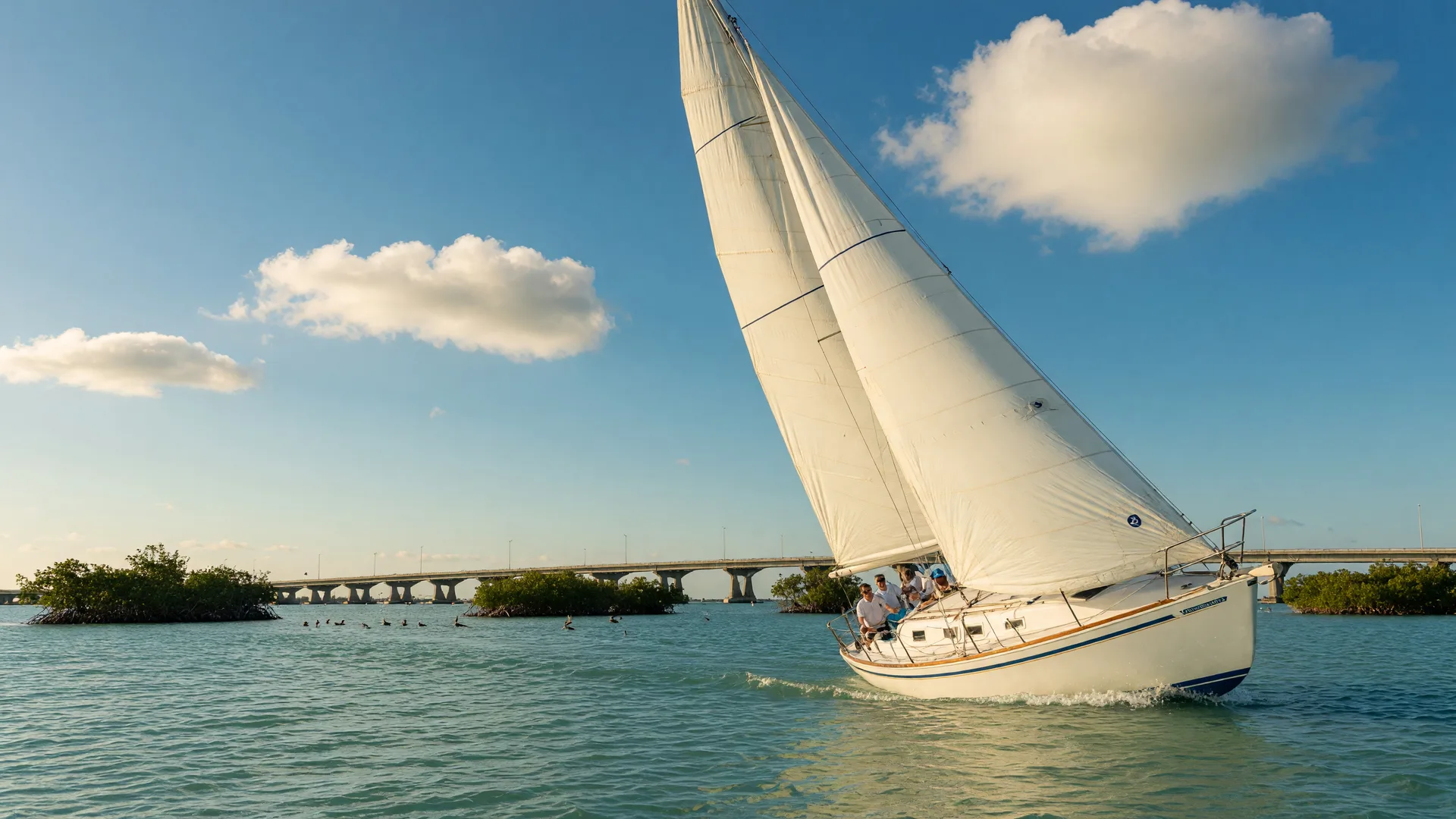
Boating Lifestyle · Sailing
Sailing in the Florida Keys: Best Routes, Charters, and Where to Keep a Boat
Key Takeaways
- Sailing in the Florida Keys works year-round: Hawk Channel on the ocean side offers deep, reef-protected water from Key Largo to Key West, while Florida Bay on the bay side rewards shallow-draft boats with calm, uncrowded sailing.
- Hawk Channel runs 1 to 3 nautical miles offshore and carries 23 to 26 feet of water off the Upper Keys and 39 to 49 feet off the Middle and Lower Keys, with the reef breaking the ocean swell.
- Boot Key Harbor in Marathon is the cruising hub of the Middle Keys: a 226-buoy municipal mooring field run by the City of Marathon, first-come first-served, typically full by Thanksgiving.
- Key Largo, Islamorada, Marathon, and Key West all have sailing charters, sunset sails, and sailing schools, from family day sails to ASA-certified lessons.
- For buyers, the same water that makes the Keys a sailing paradise decides where a sailboat can live: canal depth, bridge clearance, and dockage at the seawall separate one waterfront home from another.
What is sailing in the Florida Keys really like? The short answer: it is some of the most forgiving, best-looking sailing in the country, with two very different cruising grounds. On the ocean side, Hawk Channel gives you deep, reef-protected water from Biscayne Bay all the way to Key West, with steady southeast breezes and a calm sea because the reef breaks the swell. On the bay side, Florida Bay offers shallow, uncrowded water for boats that draw less than about four feet, with light breezes and mangrove islands instead of marinas. Add the 226-buoy mooring field at Boot Key Harbor in Marathon, a January racing tradition in Key West, and a full lineup of charters and sailing schools from Key Largo to the Lower Keys, and you have a destination built for sailors.
I have spent more than 30 years on and around these waters as a Florida Keys broker and boat owner. When clients ask whether the Keys work for sailing, the answer is always yes, with one honest caveat: the Keys reward sailors who respect the water depth. This guide covers the two routes, the best harbors and anchorages, the charters and schools worth booking, and what to look for when you want to keep a sailboat at your own dock.
Why the Keys Are a Sailing Destination
The Florida Keys sit at the southern tip of Florida, a 120-mile island chain where the Atlantic meets the Gulf of Mexico. That position creates the two cruising grounds described above, and it also creates the weather. Winters are mild, with highs in the 70s and steady breezes, and the reliable trade winds make for dependable sailing most of the year. Summer brings afternoon thunderstorms, but the sailing windows in the morning are still excellent, and the water stays warm enough for swimming all year.
The chain is also compact. Key Largo to Key West is roughly 100 nautical miles by the Hawk Channel route, an easy multi-day passage or a string of day sails. Every community along the way has a marina, an anchorage, or a mooring field, so you can sail the whole chain without ever feeling far from a dock, a restaurant, or a fuel stop.
Hawk Channel: The Ocean-Side Route
Hawk Channel is the deep-water route that runs from Biscayne Bay to Key West, tracking one to three nautical miles off the ocean side of the Keys. It is the only practical route for boats drawing five feet or more, and it is the route most cruisers use to transit the chain. Depths run about 23 to 26 feet off the Upper Keys and 39 to 49 feet off the Middle and Lower Keys, with the outer reef between you and the open Atlantic. Because the reef breaks the ocean swell, Hawk Channel is usually calm, and the prevailing southeast winds give you a comfortable reach on the way southwest.
The landmarks along the route are the same ones that anchor Keys life: the reef lights off Key Largo, Alligator Reef Light off Islamorada, Sombrero Reef off Marathon, and the Seven Mile Bridge. Each is a navigation point and a fishing or snorkeling spot in its own right. Our complete guide to the boating lifestyle in the Florida Keys covers the marinas and launch points that support the channel from the Upper Keys down.
One honest caution: Hawk Channel is protected, but it is not a lake. Strong south and southwest winds can push rough water through the reef breaks, so the smart plan is to watch the forecast and pick your days, exactly as the local charter captains do.
Florida Bay: The Inside Route for Shallow Drafts
On the bay side, Florida Bay is a completely different world: shallow, protected, and uncrowded. Depths of one to three feet are common, and the western bay side is even shallower, so this route belongs to shallow-draft boats, typically under about four feet of draft. Catamarans, trailerable cruisers, and centerboards do beautifully here. The reward is calm water, light 5 to 15 knot breezes, seas of a foot or less, and a maze of mangrove keys that feels a world away from the highway.
The one thing to understand before you cross the bay is wind tide. Strong winds push water across the shallow basin and can change depths quickly, so a spot that floated your boat in the morning can be a sandbar by afternoon. Local sailors check the tide and the wind together, and they give the marked channels, like the ones near Flamingo and the passes between the keys, extra respect.
For the Upper Keys, the bay side is where the sunset sails happen. Charter boats out of Key Largo and Islamorada run two-hour sunset cruises into the bay, where the light over the mangroves is the best show in the chain. Our guide to the best sunset spots in the Florida Keys names the bay-side overlooks and waterfront decks where you can watch the same show from shore.
Marathon and Boot Key Harbor: The Cruising Hub
If there is a capital of cruising sailors in the Keys, it is Boot Key Harbor in Marathon. The harbor holds a 226-buoy municipal mooring field run by the City of Marathon, one of the best-managed municipal fields in Florida, with hurricane-rated moorings engineered for vessels up to 60 feet. The harbor is well protected, which is why so many cruisers winter here, and the moorings are first-come, first-served, with the field typically filling by Thanksgiving and a waitlist through the season.
Boot Key Harbor sits right at the heart of the Middle Keys, a short dinghy ride from Marathon's marinas, restaurants, and the famous Old Seven Mile Bridge. It is also the practical anchor for anyone sailing the chain: a safe harbor to wait out a front, a place to reprovision, and a community of cruisers who trade charts and advice at the dinghy dock.
For a closer look at the harbor, the City of Marathon publishes the mooring rules and anchorage areas on its official site, linked in the resources section below. And for the neighborhoods and canals around Marathon, our Marathon community guide walks through the waterfront streets that put sailors closest to the water.
Key Largo and the Upper Keys
The sailing scene in the Upper Keys is built around day sails and sunset cruises rather than long passages. Key Largo is the gateway to John Pennekamp Coral Reef State Park, and the calm inside waters make it a favorite for first-time sailors and visitors of all ages. Morning Star Sailing Charters runs day sails and sunset cruises out of Key Largo, and Calypso Sailing offers catamaran charters from the same area, both good options for visitors who want to feel a real boat under sail without owning one.
Tavernier, just south of Key Largo, is home to Sunshine Coast Adventures, an ASA-certified sailing school, and Mike's Sailing Charters, which runs private sails out of the Tavernier Creek area. That makes the Key Largo to Tavernier stretch one of the easiest places in the chain to take a first lesson or book a relaxed afternoon sail. Our Key Largo community guide covers the marinas and waterfront neighborhoods in the area, and the Tavernier community guide does the same for the village next door.
Islamorada: More Than Fishing
Islamorada is famous as the sport-fishing capital of the world, but the same protected water that holds the flats makes it a fine sailing base. Sunset sails depart from the marinas along the Overseas Highway, and the bay side off Whale Harbor and Indian Key Fill offers shallow, calm water that suits small cruisers and daysailers. The village also sits within easy reach of Alligator Reef, a landmark on the Hawk Channel route and one of the best snorkeling sites in the chain.
If you are weighing where to base a boat, Islamorada's mix of deep canals on the ocean side and protected bay-side anchorages gives sailors options that few other communities match. Our Islamorada community guide breaks down the neighborhoods, canals, and marinas by how you actually use the water.
Key West: Racing and Schools
Key West closes the chain with its own sailing culture. The city has hosted the famous Key West Race Week every January since 1987, a regatta that drew fleets of more than 250 boats from a dozen nations at its peak, and the January racing tradition continues today with the Southernmost Regatta in the same warm-water breezes. For learning, the Offshore Sailing School and the Southernmost Sailing School both run ASA-certified courses out of Key West, and Danger Charters offers sunset sails and adventure charters from the historic seaport.
Key West is also the natural turn-around point for a Hawk Channel passage: you can sail the whole chain downwind, spend a few days in the anchorage, and either turn back or continue to the Dry Tortugas for the classic Keys offshore run.
Sailing Charters and Lessons Worth Booking
If you are visiting without a boat, the charter and school scene covers the whole chain:
- Key Largo: Morning Star Sailing Charters (day sails and sunset cruises), Calypso Sailing (catamaran charters)
- Tavernier: Sunshine Coast Adventures (ASA sailing school), Mike's Sailing Charters (private sails)
- Marathon: Florida Keys Sailing at Keys Fisheries Marina (charters and lessons in the Middle Keys)
- Key West: Offshore Sailing School, Southernmost Sailing School, Danger Charters (sunset and adventure sails)
Book ahead for weekends and sunset sails, which fill first, and ask about private charters if you want the boat to yourself. Most operators run trips that work for first-timers, and the captains are happy to let you take the helm once you are comfortable.
Where to Keep a Sailboat: What Buyers Should Know
For sailors who want to own the dock, the Keys are a different market than the mainland. A sailboat needs depth at the seawall, and the mast needs clearance under the bridges and power lines that cross the canals. A canal home with six feet of water at the dock and open access to Hawk Channel is a different property, and a different price, than a shallow bay-side canal where a keelboat cannot float.
This is exactly where my background matters. Between a Florida contractor's license and a home inspector license, I read waterfront property on the water and on the paperwork: seawall condition, water depth at the dock, bridge clearances, and the permits that govern docks and lifts. Our complete guide to waterfront living in the Florida Keys covers the factors that decide whether a sailboat lives at your house or at a marina across town.
Frequently Asked Questions About Sailing in the Florida Keys
Is sailing good in the Florida Keys?
Yes. Hawk Channel on the ocean side offers deep, reef-protected water with steady southeast breezes, and Florida Bay on the bay side offers calm, shallow water for small drafts. The mild climate makes sailing possible year-round, with the best windows in fall, winter, and spring.
What is Hawk Channel and why does it matter?
Hawk Channel is the deep-water route that runs from Biscayne Bay to Key West, one to three nautical miles off the ocean side of the Keys. It carries 23 to 26 feet of water off the Upper Keys and 39 to 49 feet off the Middle and Lower Keys, and the outer reef protects it from ocean swell, which is why most cruisers use it to transit the chain.
Where do cruisers moor in the Florida Keys?
Boot Key Harbor in Marathon is the main cruising hub, with a 226-buoy municipal mooring field run by the City of Marathon. Moorings are first-come, first-served and typically fill by Thanksgiving. Key West also has moorings and anchorages, and there are anchorages along the chain for boats that prefer to drop their own hook.
Can I take sailing lessons in the Florida Keys?
Yes. Sunshine Coast Adventures in Tavernier, the Offshore Sailing School and Southernmost Sailing School in Key West, and Florida Keys Sailing in Marathon all offer ASA-certified courses, from introductory lessons to full certification programs.
Do I need a deep-water canal to keep a sailboat at home?
For a keelboat, yes. Sailboats need water depth at the seawall and clearance under bridges and power lines, so canal depth and bridge clearance are the two numbers that decide whether a property works. A shallow-draft boat, like a catamaran or trailerable cruiser, has far more options.
Helpful Resources & Related Guides
Internal Resources
- Boating Lifestyle in the Florida Keys: Marinas and Launch Guide · Marinas, ramps, and dockage from Key Largo to Key West
- Complete Guide to Waterfront Living in the Florida Keys · Canal depth, dockage, and seawalls for boat owners
- Best Sunset Spots in the Florida Keys · Where to watch the bay-side show, from shore or under sail
- Islamorada Community Guide · Neighborhoods, canals, and marinas in the sport-fishing capital
- Marathon Community Guide · The cruising hub of the Middle Keys, including Boot Key Harbor
- Contact Steve Conley · Ask about waterfront homes with deep-water dockage for your sailboat
External Resources
- City of Marathon: Boot Key Harbor Mooring Field · Official mooring rules, anchorage areas, and harbor information
- Waterway Guide: Hawk Channel · Depths, currents, and navigation notes for the ocean-side route
- Visit Florida Keys · Official tourism site with charter, marina, and event listings
Local anchors: the reef lights off Key Largo, Alligator Reef Light off Islamorada, Sombrero Reef off Marathon, and the Seven Mile Bridge are the landmarks sailors use to navigate the chain, and Boot Key Harbor in Marathon is the cruising hub for the Middle Keys.
Ready to Trade the Marina for Your Own Dock?
Whether you are dreaming of a sunset sail off Islamorada or looking for a canal home in Marathon with deep water at the seawall, Steve Conley can help you find the waterfront property that fits how you sail. Call (305) 393-5859 or send a note through the contact page.

Steve Conley
Principal, Conley Sales Group at COMPASS · License #3232648
Thinking About Buying or Selling in the Florida Keys?
Whether you're buying your first waterfront home, selling a luxury property, or simply want to know what your home is worth, I'm here to help. As a local Compass REALTOR, I provide expert guidance, market insights, and personalized advice throughout the Florida Keys.
We are committed to compliance with all federal, state, and local fair housing laws. We do not discriminate against any person because of race, color, religion, sex, national origin, familial status, or disability. Equal Housing Opportunity.
Draft for review · not published, not indexed