
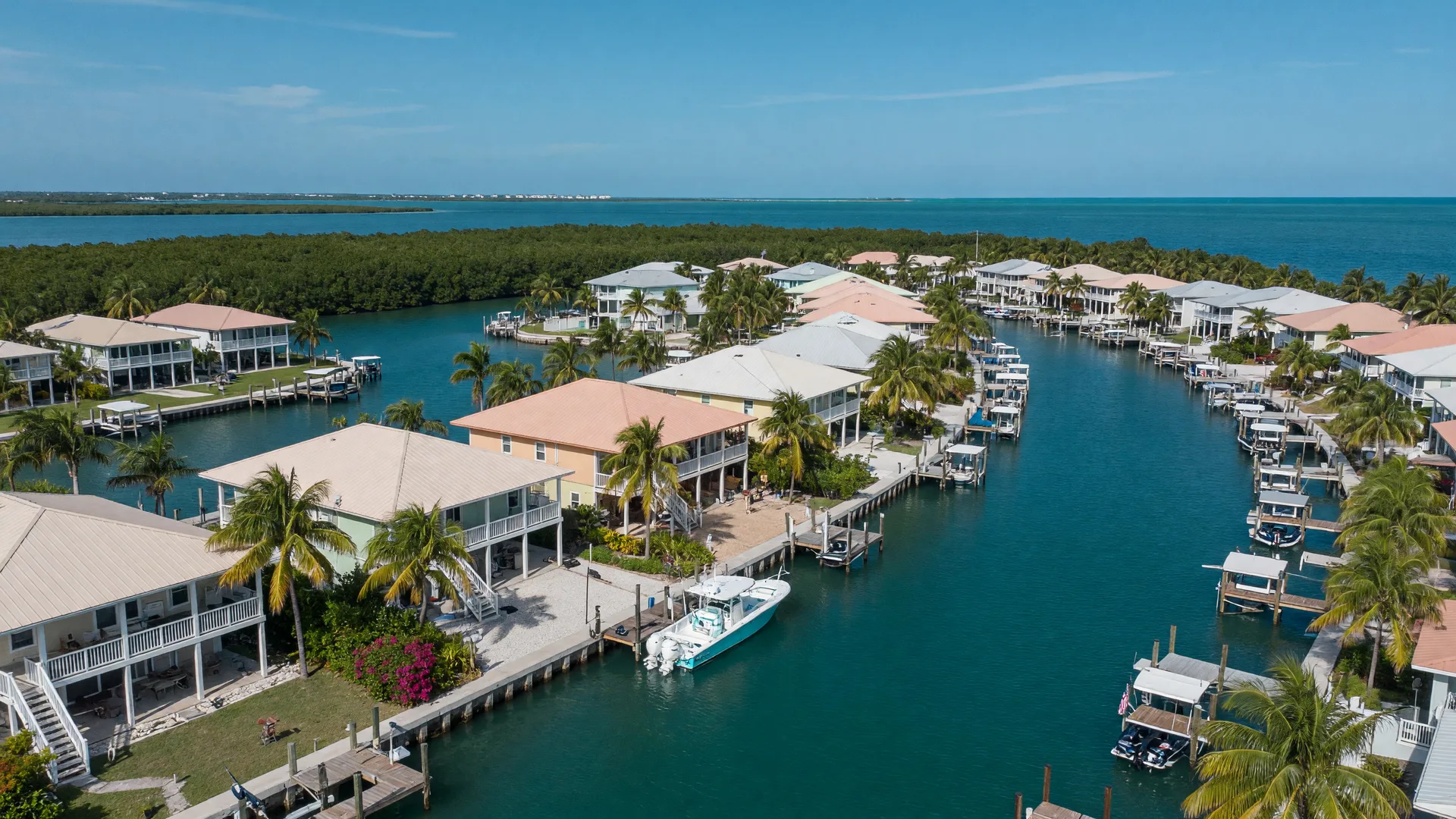
Is Buying a Florida Keys Home a Good Investment in 2026?
By Steve Conley
Thinking about buying a home in the Florida Keys as an investment? In 2026, the answer depends less on simply buying in the Keys and more on choosing the right property, location, rental strategy, and price.
The Florida Keys continue to have several characteristics that can support long-term real estate demand: limited land, restrictions on new development, a strong tourism economy, and steady demand for homes, vacation accommodations, and second residences. At the same time, buyers face higher financing costs, insurance expenses, flood exposure, and local restrictions on short-term rentals.
So, is buying a Florida Keys home a good investment in 2026?
It can be, but the property needs to make sense based on its income potential, ownership costs, location, legal rental status, physical condition, and long-term resale potential.
What Is Happening in the Florida Keys Real Estate Market in 2026?
The Florida Keys housing market has remained expensive, but price growth has been relatively moderate compared with the rapid appreciation seen in some earlier periods.
According to Redfin, the median sale price in Monroe County was approximately $971,748 in August 2026, up 1.5% from the previous year. Homes were taking an average of 144 days to sell, while the number of homes sold was down 7.2% year over year.
This creates a different environment for buyers than a market where prices are rising sharply every month.
For investors, that means there may be more opportunity to compare properties, negotiate based on condition and pricing, and look closely at the property's actual financial potential rather than relying on appreciation alone.
It also means buyers should avoid assuming that every Florida Keys property will automatically increase significantly in value.
Why Does the Florida Keys Real Estate Market Remain Attractive?
One of the biggest factors is limited housing supply.
The Florida Keys have strict land-use and development rules. Monroe County's Rate of Growth Ordinance, or ROGO, controls the allocation of new residential development in the county.
The county states that the final allocation period for the current market-rate ROGO pool closed on July 13, 2026. Monroe County is now working to implement a new pool of 657 ROGO allocations authorized by Florida legislation.
For property owners, limited new construction can be an important factor because comparable housing cannot simply be added at the same pace as in many mainland markets.
This doesn't guarantee appreciation, but scarcity can contribute to long-term demand for well-located properties.
Tourism Continues to Support Rental Demand
Tourism is another major part of the Florida Keys real estate equation.
Recent tourism data shows continued demand for accommodations throughout the Keys. In July 2026, Florida Keys hotels recorded 80.4% occupancy, with an average daily rate of $297.59 and revenue of approximately $80 million. Short-term rentals recorded adjusted occupancy of 45.8%, while average daily rate reached $476, up 12.5% year over year.
Earlier 2026 data also showed strong short-term-rental performance. In June, average daily rates increased 9% year over year to $461, while short-term-rental revenue increased 21.9%.
These numbers demonstrate why vacation-rental properties can be attractive to some investors.
However, tourism demand does not automatically mean a particular home can legally or profitably operate as a vacation rental.
That's an important distinction.
Can You Rent Out a Florida Keys Home as a Short-Term Rental?
This is one of the most important questions to answer before purchasing.
In unincorporated Monroe County, not every residential property can legally be used as a vacation rental.
The county defines vacation rentals as properties rented for less than 28 days and specifically states that certain land-use districts prohibit short-term rentals. In areas where vacation rentals are permitted, owners may need an annual special vacation-rental permit, a fire and life-safety inspection, and a licensed vacation-rental manager. The county currently lists a $1,040 application fee for the special vacation-rental permit.
The county also states that the special vacation-rental permit is nontransferable. A change of ownership requires the new owner or agent to obtain a new permit.
This is critical when evaluating a property.
A home advertised as a vacation rental should not be treated as a guaranteed short-term-rental investment simply because the current owner appears to be renting it.
Before purchasing, buyers should verify:
- Whether short-term rentals are permitted by zoning
- Whether the property has the appropriate licensing or permit
- Whether the permit can continue under the new ownership
- Minimum-stay requirements
- HOA or condominium restrictions
- Local business-tax requirements
- Applicable state and county taxes
- Property-management requirements
Never assume that an Airbnb listing means a property has transferable short-term-rental rights.
What About Long-Term Rental Income?
Long-term rentals can provide another source of income, particularly for buyers who do not want the complexity of vacation rentals.
However, Florida Keys home prices are high relative to typical rents, which means investors should carefully calculate the gross and net rental yield.
For example, a property that generates $4,000 per month in rent produces $48,000 in annual gross rent.
That is only the beginning.
The investor may also need to pay for:
- Property taxes
- Homeowners insurance
- Flood insurance
- Wind coverage
- Maintenance
- Repairs
- Property management
- Utilities
- Vacancy
- HOA fees
- Licensing and rental-related costs
After those expenses, the actual return can look very different from the headline rental income.
For this reason, a Florida Keys property should be analyzed based on net operating income, not simply monthly rent.
Mortgage Rates Matter in 2026
Financing is another important part of the investment equation.
As of September 24, 2026, Freddie Mac reported an average U.S. 30-year fixed mortgage rate of 7.03%, compared with 6.30% one year earlier.
The rate for a particular Florida Keys buyer may be different, especially for a higher-value or jumbo property, but the current financing environment means borrowing costs remain significant.
A highly leveraged investment property may therefore have very different cash-flow characteristics from the same property purchased with a larger down payment or cash.
Before buying, investors should calculate the numbers using their actual expected mortgage rate, rather than a generic online mortgage estimate.
Insurance Should Be Part of the Investment Analysis
Insurance has always been an important consideration in the Florida Keys, and buyers should obtain actual quotes before committing to a property.
There has been some improvement in Florida's insurance market in 2026. Citizens Property Insurance reported that approved 2026 rate changes included an average 8.8% decrease for homeowners multiperil policies statewide and an average 5.1% decrease for homeowner wind-only policies, although the exact impact varies by policy and territory.
Even so, the total cost of protecting a Keys property can involve more than a standard homeowners policy.
Depending on the property, buyers may need to consider:
Homeowners insurance + wind coverage + flood insurance + deductibles + liability coverage
Insurance costs can also vary substantially from one property to another based on construction, elevation, roof condition, hurricane protection, location, prior claims, and replacement cost.
That makes a pre-purchase insurance quote particularly important.
Flood Risk and Sea-Level Rise Need to Be Considered
Living near the water is one of the reasons many people are attracted to the Florida Keys. It is also one of the factors investors need to understand carefully.
Monroe County's flood information notes that flooding can be part of life in the Florida Keys, including drainage problems, heavy-rain events, and flooding affecting low-lying areas.
The county's 2026 local mitigation planning documents project regional sea-level rise of approximately 10 to 17 inches by 2040 compared with 2000 levels, using the projection framework described in the county's mitigation plan.
These are planning projections, not a prediction that every individual property will experience the same conditions.
For buyers, the practical takeaway is to evaluate the property's physical characteristics rather than looking only at a flood-zone designation.
Important questions include:
- What is the property's elevation?
- What flood zone is it in?
- What is the finished-floor elevation?
- Has the property flooded previously?
- Does the road or driveway flood?
- How old is the roof?
- Does the home have hurricane-resistant windows or shutters?
- What condition is the seawall in?
- What condition are the dock and boat lift in?
- What improvements would be required after a major storm?
These factors can influence both the cost of ownership and future resale appeal.
Waterfront Property Can Be Valuable, But It Can Also Cost More to Maintain
Waterfront property is one of the most distinctive types of real estate in the Florida Keys.
A canal-front or open-water home may appeal to buyers who want boating access, fishing, waterfront views, or a vacation lifestyle.
But waterfront ownership can also involve expenses that a typical mainland homeowner may not face.
Potential costs include:
Seawall repairs, dock maintenance, boat-lift maintenance, corrosion, storm damage, drainage improvements, insurance, and hurricane preparation.
Therefore, a waterfront property should be evaluated as both a home and a piece of infrastructure.
A property with a beautiful view but an aging seawall may have a very different investment profile from a comparable property with a recently upgraded seawall and dock.
What About Condos?
Condos can provide a lower-priced entry point into Florida Keys real estate, but buyers should conduct extensive due diligence on the association.
Florida condominium regulations now place greater emphasis on structural inspections and reserve funding for qualifying buildings.
Before buying a condo, review:
- Current HOA dues
- Reserve funds
- Recent budgets
- Insurance coverage
- Special assessments
- Structural inspection information
- Reserve studies
- Deferred maintenance
- Rental restrictions
- Pet and occupancy rules
- Any pending litigation
A lower purchase price can become much less attractive if the building is facing major capital expenses.
What Makes a Florida Keys Property More Attractive to Investors?
Not every home offers the same investment characteristics.
When comparing properties, buyers may want to look for a combination of:
A desirable location
Proximity to beaches, boating, restaurants, shopping, marinas, attractions, and major Keys destinations can influence demand.
Legal rental potential
A property with verified legal rental options may offer more flexibility than one with strict rental limitations.
Strong physical condition
A newer roof, updated systems, hurricane protection, and well-maintained exterior can reduce unexpected expenses.
Good elevation and resilience
Flood exposure and storm resilience matter both financially and operationally.
Reasonable operating costs
Insurance, taxes, HOA fees, maintenance, and utilities should fit comfortably into the investment model.
A realistic purchase price
The investment should make sense without depending entirely on rapid appreciation.
Long-term demand
Properties that appeal to multiple buyer groups can potentially have broader resale demand than highly specialized properties.
A Florida Keys Investment Doesn't Have to Be Only About Rental Income
Some buyers approach the Keys purely as an income-producing investment.
Others have a different goal.
A Florida Keys home can potentially serve as:
- A second home
- A vacation property
- A retirement property
- A long-term rental
- A legally permitted vacation rental
- A property that combines personal use with rental income
For some buyers, the value comes from combining financial goals with personal use.
For example, an owner may spend several weeks or months at the property each year and rent it during other periods, assuming local regulations, licensing requirements, HOA rules, and the property's financials support that strategy.
The right approach depends on the buyer's goals and how the property is intended to be used.
Questions to Ask Before Buying a Florida Keys Investment Property
Before making an offer, ask:
- Can I legally rent this property the way I intend to? Don't rely solely on an MLS description or what the seller says.
- What will insurance actually cost? Get current quotes before making final assumptions.
- What are my total annual ownership costs? Include taxes, insurance, flood coverage, HOA fees, maintenance, management, utilities and reserves.
- What happens if the property has several months of vacancy? Test the investment under conservative assumptions.
- What happens if insurance costs increase? Run a second scenario with higher expenses.
- What happens if the property doesn't appreciate for several years? A strong investment should not depend entirely on short-term appreciation.
- Are there permits or improvements that need to be verified? Unpermitted work can create financing, insurance and resale issues.
- What is the property's flood and storm history? Look beyond the marketing description.
- If it's a condo, what is the financial health of the association? Review reserves, assessments, inspections and insurance.
- Who are the likely buyers when I eventually sell? Think about future demand, not just today's purchase.
So, Is Buying a Florida Keys Home a Good Investment in 2026?
The Florida Keys continue to offer characteristics that can make real estate appealing to long-term buyers and investors, including limited development, tourism demand, lifestyle appeal, and a highly constrained supply of waterfront and island properties.
At the same time, the 2026 market requires more careful analysis than simply buying a property and expecting appreciation to do the work.
Monroe County home prices are high, with the August 2026 median sale price around $972,000, while financing costs remain elevated and operating expenses can be significant.
Rental potential can add another layer of opportunity, but local regulations mean that not every home can legally be used as a short-term rental.
The most important question isn't simply:
"Are Florida Keys homes a good investment?"
A better question is:
"Does this particular Florida Keys property make financial sense for my goals, budget, rental strategy, and long-term plans?"
That is where property-specific research becomes essential.
Thinking About Buying in the Florida Keys?
Whether you're looking for a waterfront home, second home, investment property, vacation-rental opportunity, or a place to eventually retire, understanding the local market is an important first step.
A knowledgeable Florida Keys real estate professional can help you compare properties, understand local market conditions, evaluate rental considerations, and identify questions to investigate before you purchase.
Ready to explore Florida Keys real estate? Contact the Conley Group Florida to discuss available properties and find a home that fits your goals.
FAQs
Frequently Asked Questions
Is buying a Florida Keys home a good investment in 2026?
How much does a home cost in the Florida Keys right now?
Can any Florida Keys home legally operate as a short-term rental?
What does a Monroe County vacation-rental permit cost?
What are the main costs of owning a Florida Keys investment property?
What are mortgage rates doing in 2026?
Are waterfront homes more expensive to maintain?
Is a condo a good entry point into the Keys market?
Helpful Guides
Guides to Help You Decide
The Ultimate Guide to Waterfront Homes in the Florida Keys
Canal-front, bayfront, and oceanfront buying factors, from insurance and ROGO to permits and dockage.
Relocating to the Florida Keys: A Complete Guide for Out-of-State Buyers
What out-of-state buyers need to know about neighborhoods, the buying process, and insurance when moving to island life.
Canal Homes Florida Keys: The Complete Buyer's Guide
Water depth, seawall inspection, bridge clearances, and market tiers for canalfront buyers.
How to Price Your Florida Keys Home to Sell Fast in 2026
Pricing strategy to sell fast in 2026, with list-to-sale ratios and segment-by-segment advice.
Is buying a home in the Keys a good investment?
Steve's direct take on whether a Keys home is a good investment, including timeline and rental strategy.
Buying in the Florida Keys
A comprehensive walkthrough of buying waterfront property in the Keys, from Key Largo to Key West.
Sources
- Monroe County Housing Market
- Monroe County ROGO/NROGO System
- Monroe County Vacation Rental Program
- Visit Florida Keys - September 2026 Tourism Data
- Freddie Mac Mortgage Rates
- Citizens Property Insurance - 2026 Rate Updates
- Monroe County - Know Your Flood Risk
- Monroe County Resiliency
- Monroe County Local Mitigation Plan
- Florida Condominium Statutes
- Islamorada Vacation Rental License & Annual Registration
- City of Key West Planning Department
We are committed to compliance with all federal, state, and local fair housing laws. We do not discriminate against any person because of race, color, religion, sex, national origin, familial status, or disability. Equal Housing Opportunity.
Ready to Take the Next Step?
Find a Florida Keys property that fits your goals.