
Boating Lifestyle · Sandbars
The Best Sandbars in the Florida Keys: Where to Anchor, Swim, and Soak It All In
Key Takeaways
- The Islamorada Sandbar off Whale Harbor Channel near Mile Marker 84 is the best-known gathering spot in the Upper Keys, with shallow turquoise water about a mile offshore and access by boat or paddle craft.
- Nest Key in Blackwater Sound and Rodriguez Key off Key Largo, the Sombrero Beach sandbar in Marathon, and the Marathon Sandbar near Curry Hammock State Park give the chain lower-key alternatives to the big weekend flotillas.
- In the Lower Keys, Looe Key sandbar near Mile Marker 27.5, Boca Grande, Woman Key, Marvin Key, and the Mud Keys offer scenic backcountry water, much of it within wildlife refuges that deserve extra care.
- Go early, mind the tide, anchor with care for seagrass, carry sun protection and water, and pack out everything you bring so the sandbars stay as clear as the postcards, welcoming to visitors of all ages.
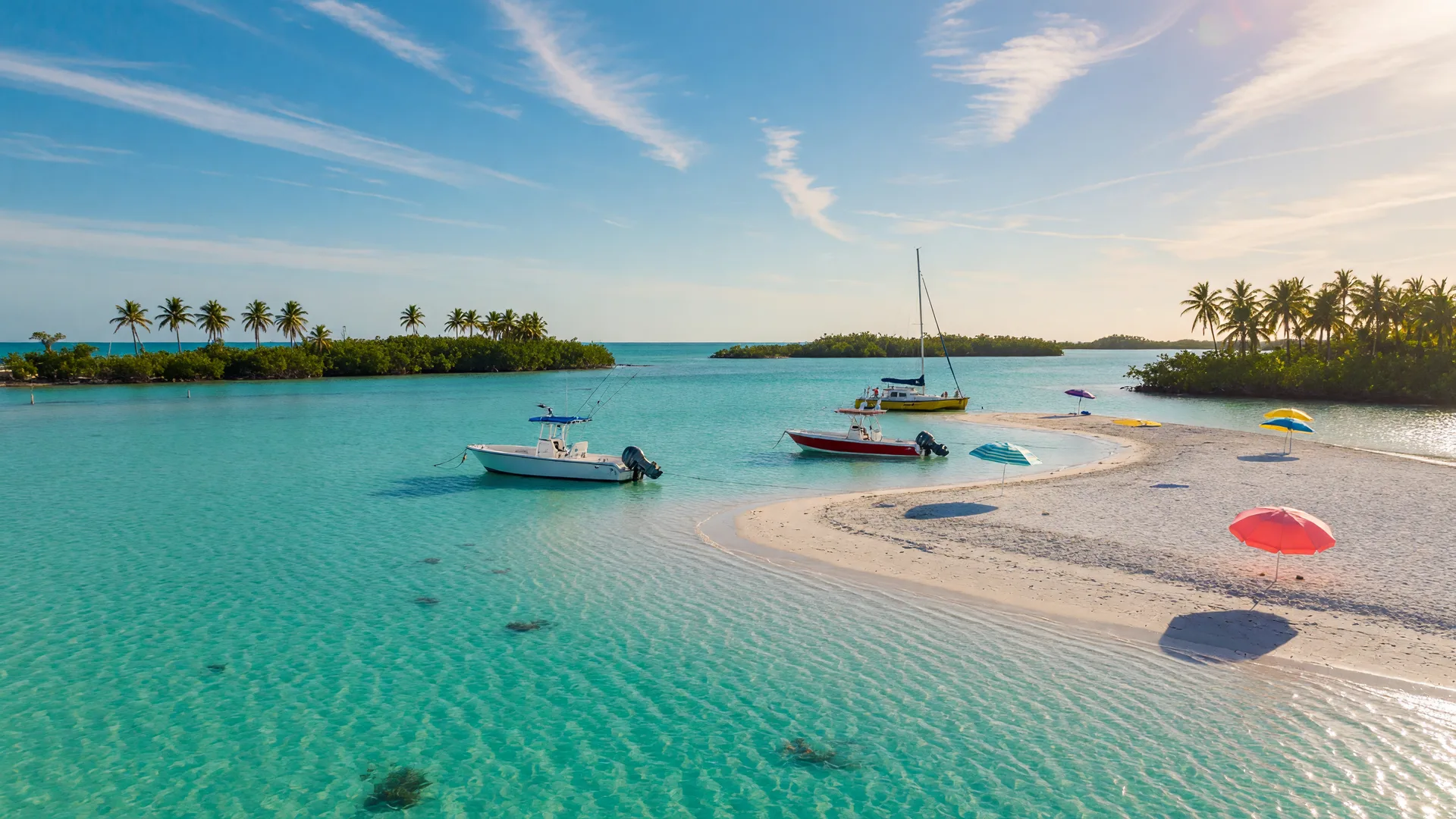
What are the best sandbars in the Florida Keys? The short answer: the Islamorada Sandbar at Whale Harbor Channel near Mile Marker 84 is the most famous, and Nest Key, Rodriguez Key, the Marathon sandbars, Looe Key, Boca Grande, and the backcountry bars near Key West cover the rest of the island chain. Sandbars are shallow stretches of white sand where boaters anchor, swim, paddle, and picnic in waist-deep turquoise water. They are part of the everyday boating lifestyle that makes Keys living unique. Here is where to find the best of them, from Key Largo to the Lower Keys, and how to do an afternoon right.
I have spent decades on these waters as a Florida Keys broker and boat owner, and when clients ask where to spend a day on the water, the sandbar list is always the same handful of spots. This guide covers each one by region, names the landmarks to look for, and lays out the etiquette and gear that keep a sandbar afternoon relaxing instead of crowded.
Islamorada: The Sandbar at Whale Harbor Channel, Mile Marker 84
The Islamorada Sandbar, also called the Whale Harbor Sandbar, sits just under a mile offshore of the Atlantic side near Mile Marker 84, outside the Whale Harbor Channel between Whale Harbor and Upper Matecumbe Key. It is the party bar of the Upper Keys: a wide, shallow stretch of blinding white sand in clear water, reached only by boat or paddle craft. On a calm weekend you might find dozens of boats rafted up in a loose line, music playing, and people swimming clear of the props.
The water stays shallow far from the sand, which makes it forgiving for families on boats of any draft, and the flats around it hold classic Upper Keys life: rays sliding along the bottom, baitfish flashing, the occasional tarpon rolling nearby. Sunrise weeks, the same bar turns mellow, and a weekday anchor here with a cooler and a mask can feel like a private beach.
Because it is a gathering spot, arrival matters. Weekends stack up by late morning, so early is the smooth water window, before seabreeze chop and before the afternoon thunderstorms remind you it is still storm season in the Keys. Anchor offshore of the shallow sand and walk out, set the anchor into sand rather than grass, and leave a long scope so the boat swings wide of the swimmers.
For a full breakdown of launch ramps and marinas in the area, our complete guide to the boating lifestyle in the Florida Keys covers the Upper Keys options in depth, from ramp access to waterfront dockage.
Key Largo: Nest Key and Rodriguez Key
Key Largo boaters tend to point in two directions. On the bay side, Nest Key sits inside Blackwater Sound, reached through the Adams Waterway cuts off the bay side, and it is the local favorite: a small mangrove island ringed by sandy shallows, calm and protected, with a low-key mood. On the ocean side, Rodriguez Key offers wider water and more exposed water, a relaxed alternative when the bay side is packed.
Both spots sit near the edge of John Pennekamp Coral Reef State Park's protected waters, so the water is clear and the seagrass beds matter. Pole or drift slowly near the shallows rather than running over grass, and you keep the bottom healthy for the next weekend. The reefs around Key Largo anchor the richest snorkeling in the chain, so after the sandbar, a snorkel drop at Molasses Reef or the Christ of the Deep statue is a natural second stop. Our guide to the best diving and snorkeling in the Florida Keys points to the top reef sites and the operators who run to them.
Marathon: Sombrero Beach Sandbar and the Marathon Sandbar
Marathon gives you two distinct sandbar moods. The Sombrero Beach sandbar sits just offshore of Sombrero Beach off Sombrero Beach Road near Mile Marker 50 on the Atlantic side, a crescent of sand that emerges at low tide and stays shallow for walking from the beach. Because it is walkable from the beach, it is the easiest sandbar afternoon in the Middle Keys for visitors without a boat, with the sandbar appearing as the tide drops.
The Marathon Sandbar, sometimes called the Curry Hammock sandbar, lies offshore east of Curry Hammock State Park near Mile Marker 56.2, between Crawl Key, Grassy Key, and the Valhalla area. It is a wide, shallow, clear-water bar over fine white sand, more of a chill floating bar than a crowded one, and Curry Hammock's paddling trails on the bay side pair well with a paddle over. The quiet paddling and slow shallow water also make the Marathon sandbars a favorite for kayaks and paddleboards, which you can bring or rent locally. Our guide to paddleboarding and kayaking in the Florida Keys lists launch points in the Middle Keys.
The Lower Keys and the Key West Backcountry
South of the Seven Mile Bridge the sandbar scene goes wild and wide. Looe Key sandbar sits near Ramrod Key at Mile Marker 27.5, roughly five miles southwest of Ramrod, just outside the Looe Key National Marine Sanctuary. It is a weekend boat-party bar with wide shallow water, and the sanctuary reef beside it is some of the best snorkeling in the Lower Keys, so the afternoon splits naturally between the swim and the reef.
Farther west, the boat-only backcountry holds the most scenic bars of all. Boca Grande sandbar sits a few miles south of Woman Key with pristine white sand and turquoise water, busy in season and lovely off-peak. Woman Key itself is a top local favorite, shallow and scenic. Marvin Key, north of the Saddlebunch Keys within the Great White Heron National Wildlife Refuge, is often called the best sandbar in the Keys for color and solitude. The Mud Keys, tucked into mangroves near Key West, are the most scenic and out-of-the-way of all.
These refuge waters are protected. Birds nest and wade in the shallow flats, and the grass beds that feed them recover slowly. Keep the boat slow, stay in open sand, give nesting birds room, and take every piece of trash back with you. For runs from Key West, tour operators and local captains know the channels, and booking a driver means nobody has to watch the depth gauge all afternoon.
When to Go and How to Anchor Right
The best sandbar windows in the Keys run from late spring through early fall, when the water is bath-warm and the seabreeze keeps the air moving. September water is still in the upper 80s, and the weekday sandbar crowds thin out as families head home for school schedules, which makes late September one of the calmest high-season windows of the year. Watch the tide: the bars are best at mid to high tide access, and some, like the Sombrero Beach bar, are at their widest as the tide drops toward low.
Anchor on sand, never on seagrass. Use a proper anchor with chain, set it with a few reverse pulls, and put out enough scope that the boat swings around the swimmers rather than over them. When you leave, pull the anchor up by hand or windlass before you motor, so the flukes do not drag a trench through the grass. Check the National Weather Service forecast before you go, and if you hear thunder, the water is the last place you want to be.
What to Bring, and What to Leave Behind
A sandbar day is a small packing list: reef-safe sunscreen and a rash guard, fresh water and snacks in a cooler, a floating line and life jackets, a mask and fins, a dry bag for the phone, and a trash bag that comes home full. Tuck a anchor buoy and a spare line in the boat for rafting up with friends. Glass does not belong on a sandbar, bare feet meet it first.
Leave the sand as clean as you found it. The Keys sandbars stay beautiful because thousands of boaters decide they will be the ones who take Monday's trash with them on Sunday. That is the whole social contract, and it is how a flotilla of anchored boats and an empty bar on Tuesday can share the same stretch of water all season.
Why the Sandbar Scene Matters to Keys Buyers
The sandbar is not just a tourist snapshot; it is a lifestyle test. Buyers who want the boats-and-bar life look for deep-water access first, and that is why canal depth, dockage, and bridge clearance matter so much in Keys real estate. If a weekend flotilla at the Islamorada Sandbar sounds like your idea of a good Saturday, the communities around Mile Marker 84 and the Upper Keys waterfront neighborhoods around Key Largo are where that lifestyle lives every week. Our Islamorada community guide, the Key Largo community guide, and the Marathon community guide walk through dockage and waterfront streets in each area, and the complete guide to waterfront living in the Florida Keys covers canals, open water, and docks in one place.
If you are comparing neighborhoods and want to know which Key actually puts you within an easy boat ride of its best sandbar, that is exactly the kind of question I answer for buyers every week. Between 30 years in the Keys, a Florida contractor's license, and a home inspector license, I read waterfront property on the water and on the paperwork.
Frequently Asked Questions About Keys Sandbars
Do you need a boat to reach a Florida Keys sandbar?
Most of the famous sandbars, including the Islamorada Sandbar at Whale Harbor and Looe Key, are boat-access only. The Sombrero Beach sandbar in Marathon is the easiest exception, since it sits just offshore of a public beach and can be reached on foot at low tide. Paddlers can paddle to the Islamorada bar on calm days, and tour operators run sandbar charters from Key West and Marathon.
Are the Florida Keys sandbars free?
Yes. Anchoring at a sandbar in open water is free, no permit or fee applies to most of the bars themselves, including the Islamorada Sandbar, Nest Key, Rodriguez Key, and the Marathon bars. Sombrero Beach has a small parking fee at the public park, and the Lower Keys refuges are free to visit by boat. Fees apply only for paid charters, charters are optional, not required.
Which Keys sandbar is most relaxed and least crowded?
Nest Key in Blackwater Sound and the Marathon Sandbar near Curry Hammock are the mellowest of the well-known bars, especially on weekdays. Boca Grande and Marvin Key draw smaller weekend crowds than the Islamorada flotilla, and the Mud Keys near Key West are the most out-of-the-way and scenic for boaters willing to run the distance.
Is snorkeling good at the Keys sandbars?
The sandbars themselves are mostly sand, so the biggest fish action happens on the grass edges and the drop-offs beside them. For reef snorkeling, pair a sandbar day with nearby reefs, like the sanctuary waters off Rodriguez Key in Key Largo or Looe Key in the Lower Keys, or the reefs protected by John Pennekamp, which is a short run from the Upper Keys sandbar stops.
When is the best time of year for Keys sandbars?
Spring through early fall is the peak season, and water is warmest from June into October, with late September giving warm water and smaller weekend crowds as fall school schedules thin things out. Mornings before the seabreeze and before afternoon thunderstorms beat any schedule on the calendar, and low tide widens the exposed sand at bars like Sombrero Beach.
Helpful Resources & Related Guides
Internal Resources
- The Complete Guide to the Boating Lifestyle in the Florida Keys · Marinas, boat ramps, and destinations from Key Largo to Marathon
- Best Diving and Snorkeling in the Florida Keys · Reef sites to pair with a sandbar day
- The Complete Guide to Waterfront Living in the Florida Keys · Canals, open water, and docks for buyers
- Islamorada Community Guide · Home of the Whale Harbor Sandbar at Mile Marker 84
- Contact Steve Conley · Ask about waterfront homes with boat access in your preferred Key
External Resources
- Visit Florida Keys · Official tourism site with water activities and charter listings
- Florida Fish and Wildlife Conservation Commission: Boating · Safety, registration, and state boating rules
- Florida Keys National Marine Sanctuary (NOAA) · Sanctuary rules and reef protections
Local anchors: the Islamorada Sandbar's mile-marker and distance details align with the local boating guides published for the area, and the Lower Keys refuge bars sit within the Great White Heron National Wildlife Refuge.
Ready to Make the Sandbar Life Your Everyday Life?
Whether you are chasing a weekend flotilla at the Islamorada Sandbar or a quiet weekday bar near Marathon, Steve Conley can help you find the waterfront home with the dock access to live it. Call (305) 393-5859 or send a note through the contact page.

Steve Conley
Principal, Conley Sales Group at COMPASS · License #3232648
Thinking About Buying or Selling in the Florida Keys?
Whether you're buying your first waterfront home, selling a luxury property, or simply want to know what your home is worth, I'm here to help. As a local Compass REALTOR, I provide expert guidance, market insights, and personalized advice throughout the Florida Keys.
We are committed to compliance with all federal, state, and local fair housing laws. We do not discriminate against any person because of race, color, religion, sex, national origin, familial status, or disability. Equal Housing Opportunity.
Draft for review · not published, not indexed, not linked